tweetindex
ES

Doug Kennedy

@DougKennedy93 · Philadelphia, PA · joined 22 Sep 2021

Founder @ Kennedy Creative | Helping B2B leaders dominate their category on LinkedIn/X and convert influence into revenue

11 259Followers
4 684Following
69 972Posts total
1.7KViews on collected posts

Últimas publicaciones

One of the fastest ways to improve your marketing: Study the people who already bought. - Why did they choose you? - Why now? - What alternatives did they consider? - What almost stopped them? Your customers are leaving clues. Great marketers pay attention. 30 views · 1 likes · 0 reposts · 0 replies Open on X →
@DougKennedy93 The best leaders know what it's like to be led. That experience is where empathy for your team actually comes from. 1 views · 0 likes · 0 reposts · 0 replies Open on X →
A strong reputation creates options. You can change companies, launch something new, enter a different market or pursue a bigger opportunity. Your job title might disappear tomorrow. The trust you’ve built with people can follow you for decades. 241 views · 14 likes · 0 reposts · 7 replies Open on X →
@DougKennedy93 Learning to follow teaches humility, empathy, discipline, and what it actually feels like to be led. If you’ve never learned to serve well, it’s hard to expect others to willingly follow you 25 views · 0 likes · 0 reposts · 0 replies Open on X →
If you want to be a good leader, you have to learn how to follow. It’s why I rarely trust someone who says, “I could never work for anyone else.” 9 times out of 10 they’re horrible leaders. 285 views · 4 likes · 1 reposts · 2 replies Open on X →
Your best customers should influence your marketing. Listen for: • Why they chose you • What almost stopped them • What surprised them • What they value most Sometimes the market is already telling you how to sell your product. You just have to listen. 251 views · 3 likes · 2 reposts · 0 replies Open on X →
Want to get clients reaching out to you instead of you reaching out to them? Download my Inbound Expert Playbook: https://t.co/W7r1d6DGFB 9 views · 0 likes · 0 reposts · 0 replies Open on X →
@DougKennedy93 Never thought of Shakespeare that way, makes sense honestly 1 views · 0 likes · 0 reposts · 0 replies Open on X →
Four hundred years later, the tools changed and the problem didn’t. A mixed crowd. One pass at your words. The freedom to leave at any moment. Shakespeare solved it with the ghost, the image, the human voice, and relentless attention to what actually landed. Write like the 10 views · 0 likes · 0 reposts · 0 replies Open on X →
The through-line is simpler than any of the tactics. Shakespeare never forgot he was writing for actual people who could walk away. He earned their attention every single line, and never assumed he had it. That humility, that respect for a distractible crowd, is the entire game 13 views · 0 likes · 0 reposts · 1 replies Open on X →
So here’s the whole playbook from the master. 1. Write for the whole room. 2 Open on the ghost. 3. Make your words into pictures. 4 Talk like a human. 5. Steal the topic, own the take. 6. Watch your audience like your career depends on it, because his did. 4 views · 0 likes · 0 reposts · 1 replies Open on X →
You have the same thing, and better. Every post is a night at the Globe. You can see precisely what lands and what dies. Most writers ignore that data or take it personally. Shakespeare treated the crowd’s reaction as free research and let it sharpen the next thing he made. 6 views · 0 likes · 0 reposts · 1 replies Open on X →
Lesson six, the habit behind all of it: he watched his audience every single day. He was an actor on that stage. He stood in front of those crowds night after night, watching exactly which lines landed, which jokes killed, which speeches lost the room. Then he wrote the next 5 views · 0 likes · 0 reposts · 1 replies Open on X →
That’s permission for every writer who thinks their idea’s been done. It has. Everything has. Shakespeare proved the value was never in the raw idea, it was in the specific way you tell it….Your take, your voice, your angle on the familiar thing. That’s the part no one can 7 views · 0 likes · 0 reposts · 1 replies Open on X →
Lesson five: he stole almost every plot, and it didn’t matter. Romeo and Juliet, Hamlet, Julius Caesar, most of his stories were lifted from older sources everyone already knew. He wasn’t precious about originality of material. His genius was in the execution. The angle, the 12 views · 0 likes · 0 reposts · 1 replies Open on X →
This is the trap most online writers fall into. They write the way they were taught in school: formal, hedged, throat-clearing, trying to sound smart. It reads as dead on a screen. Shakespeare, the most celebrated writer alive, wrote closer to how people talk, not further from 10 views · 0 likes · 0 reposts · 1 replies Open on X →
Lesson four: he wrote the way people actually talk. Shakespeare came up right as English drama was shifting from stiff, formal rhyming verse toward something closer to real speech. He rode that wave hard. His dialogue has the rhythm of how people actually spoke, which is why 16 views · 0 likes · 0 reposts · 1 replies Open on X →
There’s a subtle craft point underneath this. Even the words he coined, his audience could understand instantly from context, because they sounded like what they meant. He wasn’t showing off. He was making ideas land on first contact. Sticky language isn’t fancy language. It’s 12 views · 0 likes · 0 reposts · 1 replies Open on X →
Lesson three, and this one’s my favorite: he made words sticky on purpose. Shakespeare is credited with putting hundreds of words and phrases into print for the first time. And notice how many are still glued into the language 400 years later. “Wild-goose chase.” “Heart of 10 views · 0 likes · 0 reposts · 1 replies Open on X →
Look at why those stuck. They’re concrete. They’re vivid. They turn an abstract idea into a physical picture you can see. “Break the ice” beats “ease initial social tension” every time, because one is an image and the other is a definition. Online, the concrete image always 9 views · 0 likes · 0 reposts · 1 replies Open on X →
Every one of your posts lives or dies the same way. The first line is not a warm-up. It’s the whole ballgame. Shakespeare knew that if he opened with throat-clearing, he’d lose the room before the story started. So he opened on the ghost, the storm, the murder. Open on the 16 views · 0 likes · 0 reposts · 1 replies Open on X →
Lesson two: he was obsessed with the hook. Shakespeare almost never opened cold. • Hamlet starts with a terrified guard and a ghost. • Macbeth opens with witches on a storm-blasted heath. • The Tempest literally begins with a shipwreck. He grabbed the rowdy crowd in the 39 views · 0 likes · 0 reposts · 1 replies Open on X →
So lesson one: he wrote for everyone in the room at once. The groundlings wanted dirty jokes, ghosts, sword fights, blood. The nobles wanted poetry, politics, philosophy. Shakespeare refused to choose. He layered his work so the same scene delivered a crude joke and a profound 16 views · 0 likes · 0 reposts · 1 replies Open on X →
That’s the online writing masterclass right there. Your audience isn’t one person. Some want the quick, punchy take. Some want the deep insight. The best posts, like the best scenes, work on both levels: a surface anyone can enjoy, and a depth that rewards the people who slow 12 views · 0 likes · 0 reposts · 1 replies Open on X →
And here’s the constraint that shaped his entire craft. The audience heard every word once. Out loud. In real time. No rewinding, no re-reading, no going back to catch what they missed. If a line didn’t land instantly, it was gone forever. That’s your reader on a screen, thumb 60 views · 0 likes · 0 reposts · 1 replies Open on X →
His audience was brutal, and this is the key to everything. His theater, the Globe, packed in a total mix of people. Nobles paid extra for cushioned seats. But right in front of the stage stood the “groundlings,” who paid a penny, roughly the price of a loaf of bread, to stand 15 views · 0 likes · 0 reposts · 1 replies Open on X →
First, who he actually was, because the marble-statue version hides the lesson…. Shakespeare wasn’t a lofty poet locked in a study writing for eternity. He was a working man in the entertainment business. An actor, he was a shareholder in his theater company, and a guy who 47 views · 0 likes · 0 reposts · 1 replies Open on X →
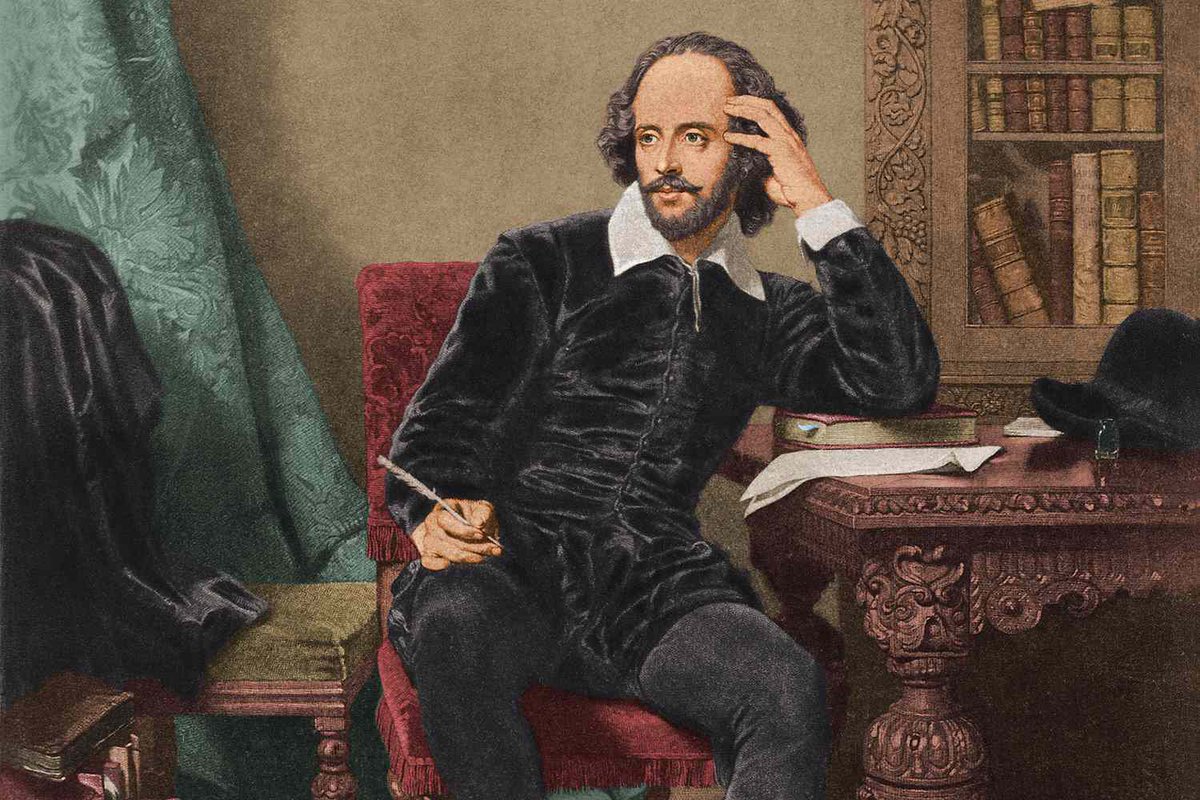
Shakespeare was, in his own time, a commercial writer fighting for the attention of a loud, distracted, half-drunk crowd. Which makes him the single best teacher for anyone writing online today. Same exact problem: hold people who can leave at any second. Here’s what the https:
587 views · 8 likes · 1 reposts · 4 replies Open on X →

Frente a cuentas del mismo tamaño

28 publicaciones de los últimos 90 días, junto al rango de 10K–100K seguidores. llega a menos gente que sus pares, pero los implica mucho más.

Visualizaciones medianas12esta cuenta1 098mediana de 10K–100K
Alcance, %0.11%esta cuenta3.91%mediana de 10K–100K
Interacción, %6.25%esta cuenta1.66%mediana de 10K–100K
MétricaEsta cuentaMediana de 10K–100KProporción
Visualizaciones medianas por publicación121 0980.01×
Alcance (visualizaciones ÷ seguidores)0.11%3.91%0.03×
Tasa de interacción6.25%1.66%3.77×

Otras cuentas de este rango →   Comparar con otra cuenta →   Cómo se construyen estas referencias →

Growth & engagement

How the posts we collected actually performed: views and reaction rate post by post, what the audience did with them, and where the follower count goes.

Views per post

71 Sep
5
6
4
13
10
12 Sep
9
25114 Sep
285
25
24115 Sep
1
30

Last 14 collected posts, oldest on the left. The scale is logarithmic: one post can outrun the rest a hundred times over.

Engagement rate per post

14.29%1 Sep
20.00%
16.67%
25.00%
7.69%
0.00%
0.00%2 Sep
0.00%
1.99%14 Sep
2.46%
0.00%
8.71%15 Sep
0.00%
3.33%

Reactions — likes, reposts, replies and quotes — divided by views. Median for 10K–100K accounts is 1.66%.

What the audience does

Likes45.5%30 in total
Reposts6.1%4 in total
Replies47.0%31 in total
Bookmarks1.5%1 in total

Share of every reaction we collected for this account. Replies mean argument, reposts mean endorsement, bookmarks mean the post was worth keeping.

The follower curve appears once this account has two daily snapshots — we take one a day, and this one is on its first.

Cuentas similares