tweetindex
FR

Samuel Hughes

@SCP_Hughes · London · joined 30 Aug 2020

Editor @WorksInProgMag | Fellow @CPSThinkTank & @createstreets | Interested in architecture & urbanism | Views my own

43 550Followers
277Following
7 744Posts total
660.2KViews on collected posts

Derniers posts

@SCP_Hughes "Why do people end up buying buildings that are so different to the buildings they say they prefer" from what I have seen buildings of the second type are pretty rare for new development and are always on the higher end of the price - doesn't that explain it? 8.9K views · 272 likes · 1 reposts · 8 replies Open on X →
@SCP_Hughes lol https://t.co/tzMB3diYNh
7.4K views · 118 likes · 1 reposts · 1 replies Open on X →
@SCP_Hughes It's good to know that normal people don't have opinions about architecture that track their political opinions or demographics. Not everything requires a culture war! 😌 https://t.co/aIMHsIdDKI
14.8K views · 198 likes · 7 reposts · 6 replies Open on X →
This is hardly a visually perfect building, but in the very weak field of contemporary hospital design, it is an interesting step forward. 8K views · 169 likes · 3 reposts · 14 replies Open on X →
Le nouvel hôpital Marie Lannelongue au Plessis-Robinson, inauguré cet été. Archi : Pargade https://t.co/S2GUWR9acf
16.9K views · 181 likes · 12 reposts · 8 replies Open on X →
London has a problem with road closures. For example, New North Road has been partly or wholly blocked for several weeks by Thames Water. Thames Water works only one shift per weekday, so after 4 or 5pm and at weekends the site is empty and silent. Transport for London says that
41.5K views · 503 likes · 63 reposts · 49 replies Open on X →
I am not confident making predictions about how vaguely worded planning policies will play out in practice, but this analysis seems plausible: the train belt reforms will be ineffective because of the unrealistic affordable housing tariff, but the densification reforms could have 10.2K views · 44 likes · 3 reposts · 0 replies Open on X →
Here's my verdict on Labour's rewrite of the new National Planning Policy Framework: - Building on the 'Train Belt' could radically boost supply, but by insisting on extremely high affordable housing shares (up to 50%) many projects won't get off the ground. - However, the 30.4K views · 146 likes · 27 reposts · 6 replies Open on X →
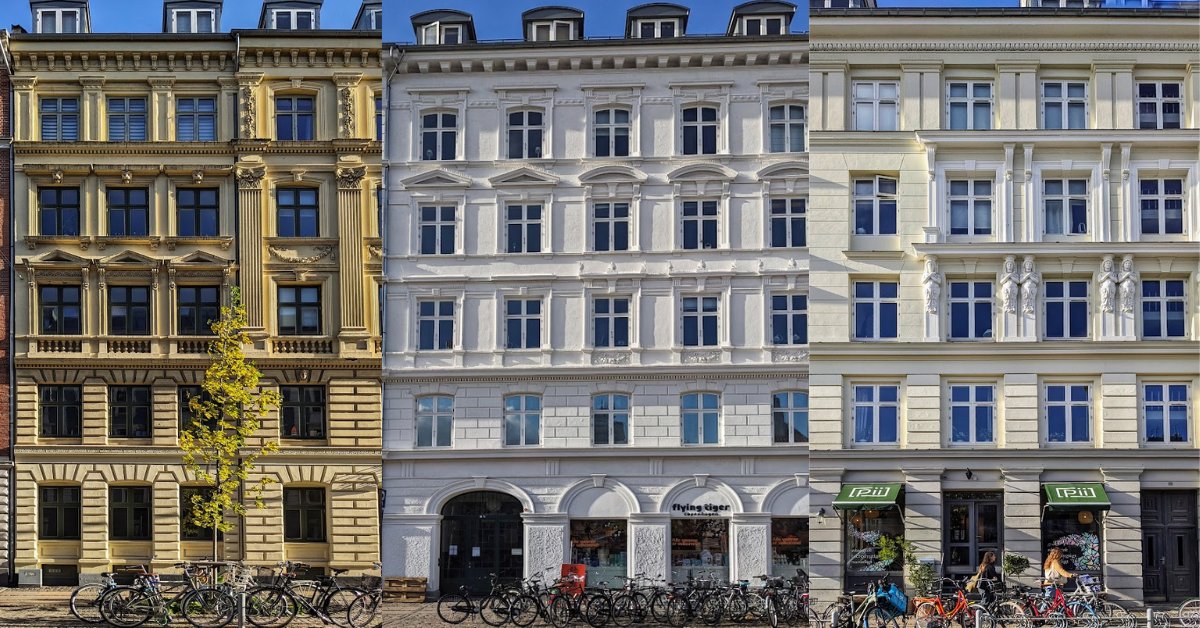
This is an illuminating comparison, but I'm not sure the reasons given for the aesthetic superiority of the left building are quite right. 1. The small difference in size between imperial and metric bricks is, in my view, of no importance: what matters is whether the bricks 26.9K views · 188 likes · 9 reposts · 15 replies Open on X →
I was delighted to learn yesterday of a new cooling technology for English homes. Followers of this account will know that I have long been interested in awnings. Awnings work by blocking sunlight before it passes through the window, averting greenhouse effects. Awnings are ht
129.8K views · 1.4K likes · 150 reposts · 61 replies Open on X →
@SCP_Hughes Depending on the ornament, maintenance is an issue. The more ornate, the grubbier over time. The building from 1900s was covered in soot until coal burning in cities stopped about 1960/70. Cleaning it was hard. 3.3K views · 23 likes · 0 reposts · 2 replies Open on X →
Why this did not happen is a profound and interesting question. But its answer lies in culture, not technology. Or so I argue in: https://t.co/NwCBFImP1H 11K views · 214 likes · 14 reposts · 8 replies Open on X →
In other words, technology seems to have made ornament more affordable, not less. If demand had remained constant, the twentieth century might have been a golden age for architectural ornament. This precast concrete dome is from a Bahá'í Temple in Illinois. https://t.co/xHfo809Xy
11.5K views · 185 likes · 10 reposts · 2 replies Open on X →
The upshot of this is that 1850-1914 saw considerable democratisation of ornament, as of many consumer products. A good that had previously been available mainly to elites started to appear in the housing of ordinary people. https://t.co/8dburuqLVI
10.3K views · 166 likes · 2 reposts · 2 replies Open on X →
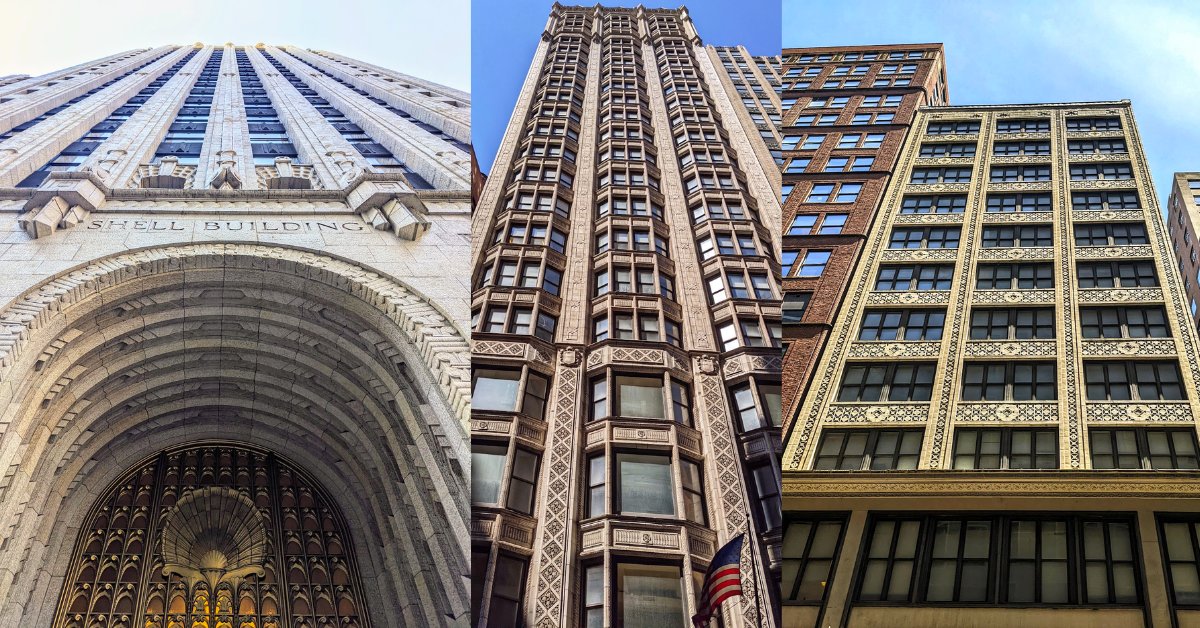
Factory production also led to an explosion of terracotta ornament, which is made simply by pressing clay into a mould and then firing it. Notice how few underlying moulds are necessary for the vast systems of terracotta ornament on these buildings. https://t.co/GbFYSBrpAi
10.8K views · 160 likes · 3 reposts · 1 replies Open on X →
Cast stone cannot emulate all the textural effects of natural stone, but it can produce excellent ornament without a single stroke of a chisel. It seems to have been particularly common in the United States. https://t.co/FkuoGwwYKT
11.4K views · 152 likes · 4 reposts · 1 replies Open on X →
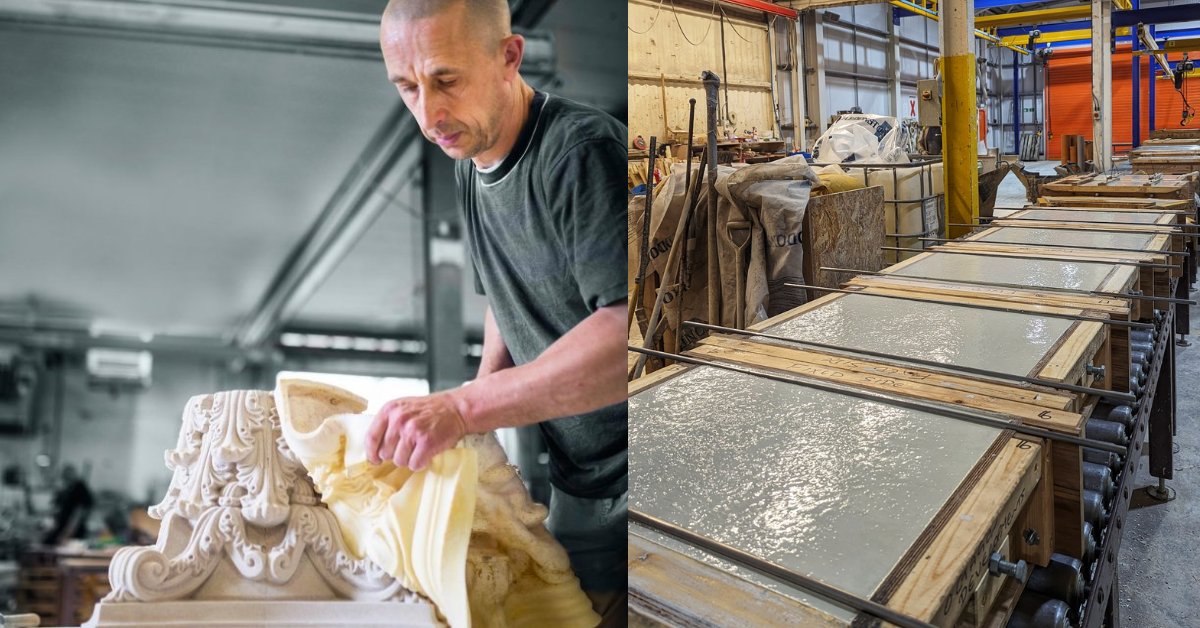
Many ornaments started being produced in cast stone, a kind of concrete that emulates the appearance of stone. Many cast stone ornaments can literally be made on conveyor belts, with the concrete shooting out of a nozzle into reusable moulds. https://t.co/cFQ9v8GAJo
12.9K views · 153 likes · 5 reposts · 3 replies Open on X →
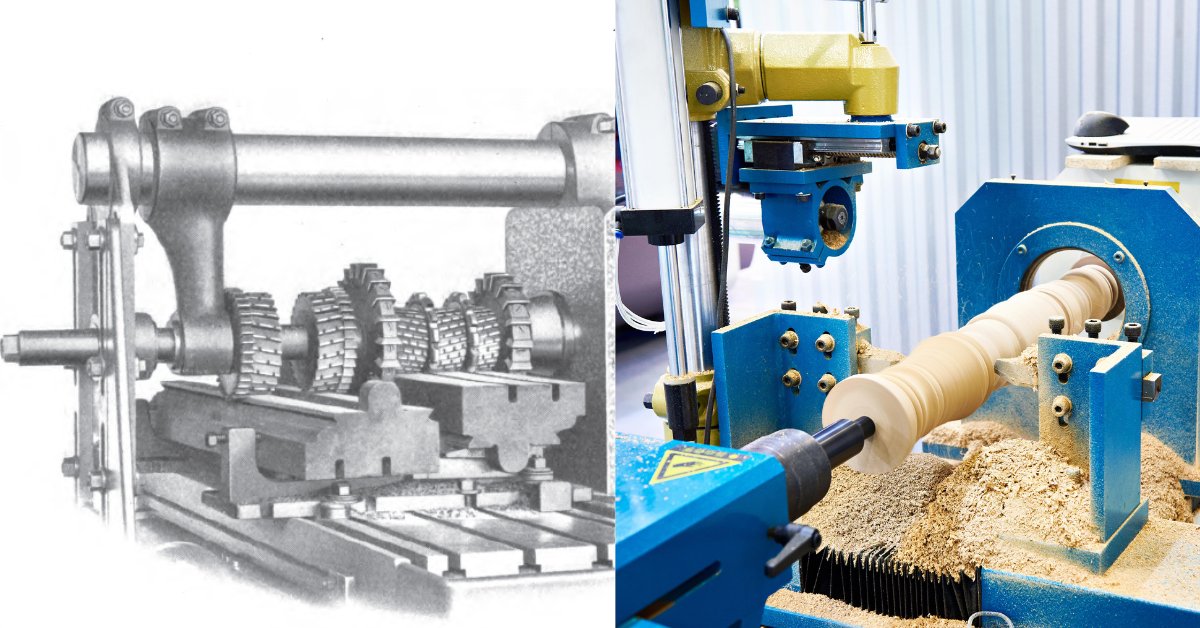
In the 19th and 20th centuries, we became vastly better at this. In fact, there was a kind of revolution in the technology of ornament manufacture. Mechanised mills and lathes revolutionised woodwork, allowing ornaments to be produced in seconds that had previously taken days. ht
12.8K views · 146 likes · 6 reposts · 1 replies Open on X →
Virtually every stone statue you have ever seen is a machine copy, not an ‘original’. https://t.co/LQCV1AUM1m
15.1K views · 160 likes · 5 reposts · 2 replies Open on X →
Since Antiquity, however, people have tried to mechanise production. For example, sculptors have long avoided hand-carving statues or ornaments: they model them in clay, and then the design is mechanically transferred to stone using a device called a ‘pointing machine’. https://t
14K views · 151 likes · 8 reposts · 2 replies Open on X →
Like many myths, this is partly true. In premodern societies, making ornament generally did take a great deal of craftsmanship. https://t.co/MrXfTOZjbg
14.7K views · 147 likes · 2 reposts · 2 replies Open on X →
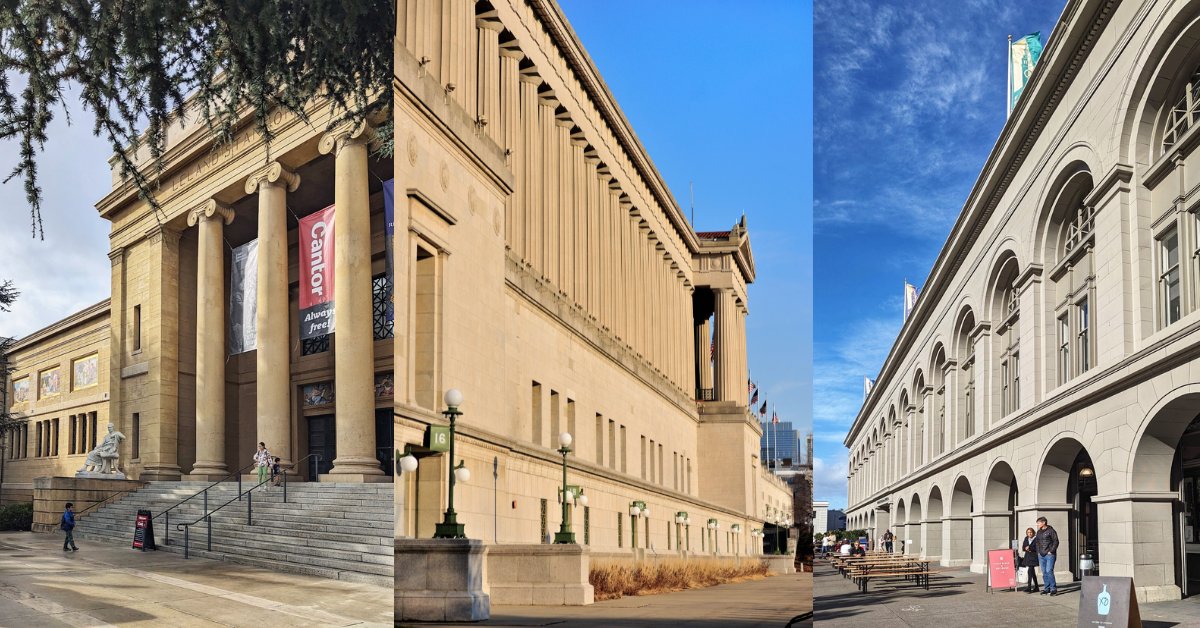
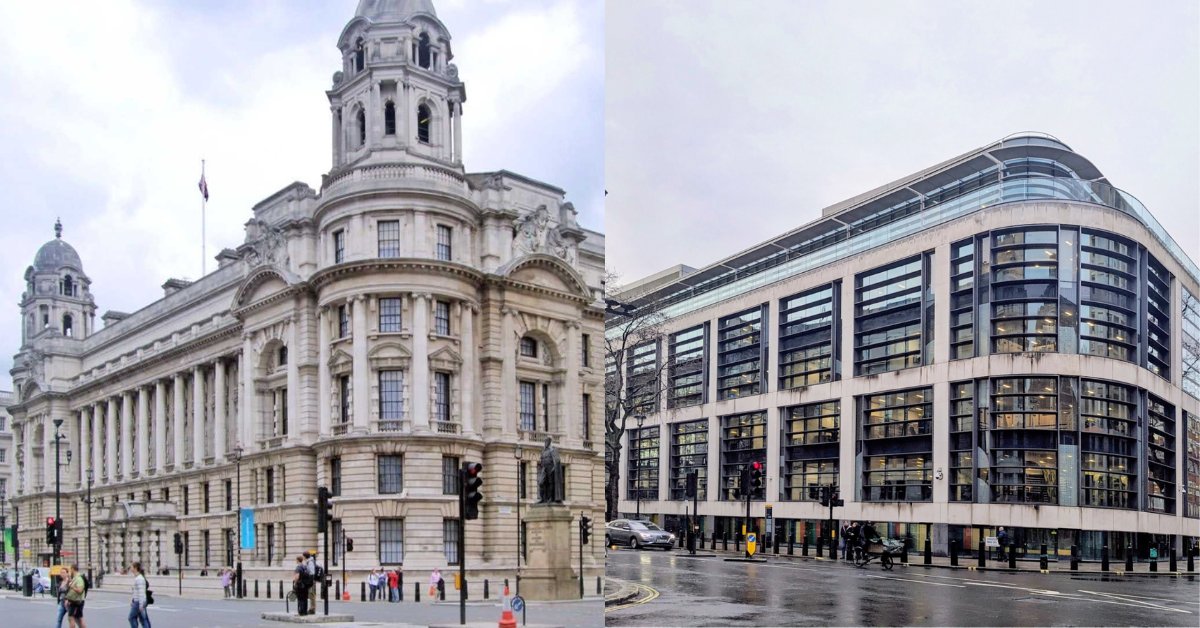
It is generally assumed that making ornament is labour intensive. This leads many to think that the rising cost of labour in modern societies led to the decline of ornament, as it was outcompeted by smooth machine-made forms. Here, public buildings from the 1900s and 2000s. https
237.2K views · 1.1K likes · 120 reposts · 20 replies Open on X →

Face aux comptes de taille comparable

10 posts des 90 derniers jours, à côté de la tranche de 10K–100K abonnés. diffusé à plus de monde que les comptes de taille comparable.

Vues médianes15 860ce compte1 070médiane pour 10K–100K
Portée, %36.42%ce compte3.77%médiane pour 10K–100K
Engagement, %1.33%ce compte1.65%médiane pour 10K–100K
IndicateurCe compteMédiane pour 10K–100KRapport
Vues médianes par post15 8601 07014.8×
Portée (vues ÷ abonnés)36.42%3.77%9.66×
Taux d'engagement1.33%1.65%0.81×

Autres comptes de cette tranche →   Comparer avec un autre compte →   Comment ces repères sont établis →

Growth & engagement

How the posts we collected actually performed: views and reaction rate post by post, what the audience did with them, and where the follower count goes.

Views per post

10.3K20 May
11.5K
11K
3.3K
129.8K13 Aug
26.9K17 Aug
30.4K18 Aug
10.2K
41.5K3 Sep
16.9K4 Sep
8K
14.8K11 Sep
7.4K
8.9K

Last 14 collected posts, oldest on the left. The scale is logarithmic: one post can outrun the rest a hundred times over.

Engagement rate per post

1.65%20 May
1.71%
2.16%
0.76%
1.23%13 Aug
0.79%17 Aug
0.59%18 Aug
0.46%
1.51%3 Sep
1.21%4 Sep
2.32%
1.42%11 Sep
1.61%
3.15%

Reactions — likes, reposts, replies and quotes — divided by views. Median for 10K–100K accounts is 1.65%.

What the audience does

Likes72.7%5 961 in total
Reposts5.6%455 in total
Replies2.6%214 in total
Quotes1.0%86 in total
Bookmarks18.1%1 481 in total

Share of every reaction we collected for this account. Replies mean argument, reposts mean endorsement, bookmarks mean the post was worth keeping.

Followers by day

9 Sep

Daily snapshots since 09 Sep 2026; the dashed line is the starting count.

Comptes similaires