tweetindex
ID

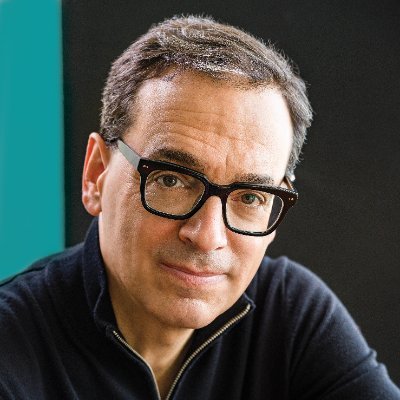
Daniel Pink ✓

@DanielPink · Washington, DC, USA · joined 13 Apr 2008

#1 New York Times Bestselling author of 7 books.

442 166Followers
1 948Following
20 236Posts total
1.5MViews on collected posts

Postingan terbaru

Psychologists have tracked what happens when people share their goals — two landmark studies, a decade apart. One way of sharing worked. The other backfired. 42.5K views · 192 likes · 19 reposts · 3 replies Open on X →
Three books I'd hand anyone who feels stuck. (After reading for 50 years)🧵 135K views · 558 likes · 47 reposts · 11 replies Open on X →
A 20-minute exercise from Stanford that I'd put up against most career coaching. It's called the Odyssey Plan. Three five-year futures, on one page. 🧵 186.4K views · 1.2K likes · 122 reposts · 25 replies Open on X →
Harvard has been following the same group of men since 1938. Eighty-plus years of data on who thrives at 80. The number one predictor was not IQ, income, or fame. 🧵 334.3K views · 424 likes · 66 reposts · 15 replies Open on X →
@DanielPink saying no faster is the one i learned way too late 3.4K views · 5 likes · 0 reposts · 0 replies Open on X →
The slump. Economists David Blanchflower and Andrew Oswald found well-being follows a U across adulthood in more than 70 countries, bottoming out in the late 40s and climbing from there. If your mid-50s feel better than your late 40s, the data agrees. Midpoints are when we wake 6.3K views · 12 likes · 0 reposts · 2 replies Open on X →
How to plan your day (for people in their 50s). I'm 61, so this one's personal: 1. Your body clock has drifted earlier since your 20s. Use it. 2. The midlife slump is real, and it lifts. 3. Say no faster. Your time horizon is the asset. 4. Take your breaks outside, with 63K views · 170 likes · 17 reposts · 6 replies Open on X →
Chronotype changes with age. Till Roenneberg at LMU Munich tracked more than 200,000 body clocks: we're at our most owlish around 20, then drift back toward morning for decades. If you were a night person at 25, you probably aren't anymore. Your peak came forward. Put the hard 6.8K views · 11 likes · 0 reposts · 1 replies Open on X →
Say no faster. Laura Carstensen at Stanford found that as our time horizon shortens, we stop collecting and start selecting: fewer people, deeper ties, less patience for the meeting that doesn't matter. From the outside it looks like withdrawal. It's editing. Do it on purpose. 5.6K views · 24 likes · 0 reposts · 1 replies Open on X →
Breaks: something beats nothing, moving beats sitting, outside beats inside, with someone beats alone, fully detached beats phone in hand. I resisted this for years. Now a daily break list sits on my desk, and my afternoon miles are with my wife. 5.4K views · 20 likes · 0 reposts · 1 replies Open on X →
Quit books at 100 minus your age pages. At 61 a book gets 39 pages from me. I was a lifelong finisher. Reformed. Your reading hours are finite. The shelf isn't. 6.6K views · 22 likes · 0 reposts · 6 replies Open on X →
Your fifties come with an earlier clock and an edited calendar. Plan around both. What did you drop this year that you should have dropped at 40? 5.8K views · 7 likes · 1 reposts · 1 replies Open on X →
On my last book, I hit a stretch where I couldn't write. I'd sit down, open the file — and twenty minutes later I'd be watching sports highlights. I've written seven books, one of them about motivation. This wasn't supposed to happen to me. https://t.co/YWX41qMPK1 11.4K views · 78 likes · 1 reposts · 4 replies Open on X →
The science of getting your day right (for night owls): 1. Analytic work in the late afternoon and evening. 2. Creative work in the morning. 3. Admin in the middle of the day. 4. No big decisions before your peak. A 10am brain is your 3pm brain. 5. Keep weekday and weekend 12.4K views · 131 likes · 10 reposts · 5 replies Open on X →
@DanielPink I'll add few more points - Don't watch News on TV nor read any Newspapers. Also, devote minimum time to Political & Religious issues (especially partisan & polarizing ones) when using social media and when you do, prioritize local issues. Unfollow (even better - 9K views · 39 likes · 1 reposts · 0 replies Open on X →
2. End the "what if" spiral. "What if it goes wrong" is protection mode, and your brain will keep supplying answers for hours. Ask the other one: what if it works out? Same question, wider frame. 41.2K views · 262 likes · 11 reposts · 3 replies Open on X →
1. The no-complaining rule. Complaining doesn't solve problems. It rehearses helplessness. Go 24 hours without complaining, out loud or in your head, and notice how much energy comes back. 42K views · 356 likes · 16 reposts · 3 replies Open on X →
4. Stop rehearsing disaster. If you keep imagining the worst case, you train your nervous system to expect it. Edward Watkins at the University of Exeter found the fix is in the question you ask: "why did this happen?" keeps you stuck, "how do I handle this?" moves you. 38.7K views · 255 likes · 10 reposts · 1 replies Open on X →
Overthinking is untrained thought on autopilot. So train it. Which of the four are you starting with? 33.4K views · 158 likes · 9 reposts · 12 replies Open on X →
3. The 10-second rule. When a negative thought shows up, ask: does this deserve my attention? Give it 10 seconds. A thought you don't feed loses power fast. 39.4K views · 221 likes · 9 reposts · 1 replies Open on X →
Four habits that train your mind to reduce negative thinking, if you're an overthinker. Yale psychologist Susan Nolen-Hoeksema spent decades on rumination and found the trap: replaying a problem feels like solving it, and makes you worse at solving it. The habits: 🧵 350.4K views · 1.9K likes · 249 reposts · 28 replies Open on X →
If the thought still won't leave, write it down. James Pennebaker at UT Austin: 15 to 20 minutes, three or four days in a row, about the worry itself. Fewer doctor visits and better mood, months later. 37.1K views · 129 likes · 5 reposts · 3 replies Open on X →
For the last 20+ years, I’ve been studying work, creativity, science, and the human condition. Over the next few months, I’ll be sharing the best of what I’ve learned about living a life that matters. Stay tuned! https://t.co/rymEYeGYg9
1:10
60K views · 265 likes · 20 reposts · 26 replies Open on X →

Dibandingkan akun berukuran sama

22 postingan dari 90 hari terakhir, dibandingkan dengan rentang 100K–1M pengikut. tampil luas, tetapi sedikit penonton yang merespons.

Median tayangan35 280akun ini5 983median untuk 100K–1M
Jangkauan, %7.98%akun ini1.49%median untuk 100K–1M
Interaksi, %0.45%akun ini0.93%median untuk 100K–1M
MetrikAkun iniMedian untuk 100K–1MRasio
Median tayangan per postingan35 2805 9835.90×
Jangkauan (tayangan ÷ pengikut)7.98%1.49%5.35×
Tingkat interaksi0.45%0.93%0.49×

Akun lain pada rentang ini →   Bandingkan dengan akun lain →   Bagaimana tolok ukur ini disusun →

Growth & engagement

How the posts we collected actually performed: views and reaction rate post by post, what the audience did with them, and where the follower count goes.

Views per post

12.4K4 Sep
11.4K
5.8K
6.6K
5.4K
5.6K
6.8K
63K
6.3K
3.4K
334.3K8 Sep
186.4K10 Sep
135K
42.5K11 Sep

Last 14 collected posts, oldest on the left. The scale is logarithmic: one post can outrun the rest a hundred times over.

Engagement rate per post

1.20%4 Sep
0.73%
0.15%
0.44%
0.39%
0.45%
0.18%
0.31%
0.22%
0.15%
0.15%8 Sep
0.70%10 Sep
0.46%
0.50%11 Sep

Reactions — likes, reposts, replies and quotes — divided by views. Median for 100K–1M accounts is 0.93%.

What the audience does

Likes32.5%6 425 in total
Reposts3.1%613 in total
Replies0.8%158 in total
Quotes0.1%16 in total
Bookmarks63.5%12 542 in total

Share of every reaction we collected for this account. Replies mean argument, reposts mean endorsement, bookmarks mean the post was worth keeping.

The follower curve appears once this account has two daily snapshots — we take one a day, and this one is on its first.

Akun serupa