tweetindex
PT

Iain Cameron ✓

@theiaincameron · Stirling, Scotland · joined 23 Oct 2011

I study and write (via the @RMetS) about snow-patches on UK hills. Self-confessed chionophile and author of 'The Vanishing Ice'.

136 020Followers
298Following
25 686Posts total
2.1MViews on collected posts

Posts recentes

@theiaincameron Love the thought that nature created a barrier to others intrusion I don’t know if you ever did a thread on the Chilean people and their separation over millennia due to the Andes…always been fascinated that two cultures didn’t know each other in close proximity… 7.1K views · 24 likes · 0 reposts · 1 replies Open on X →
The Kalash are a wonderful example of what mountains can do to history. A few narrow valleys preserved a language, a religion, and a way of life that largely disappeared from the surrounding region. Sometimes geography does not just divide people. It can also keep a culture http
12.9K views · 275 likes · 6 reposts · 8 replies Open on X →
Their survival is not guaranteed, alas. The community is tiny, their language is endangered, and outside pressure, conversion and cultural change have reduced their numbers over time. That is why parts of Kalash heritage are treated as requiring urgent safeguarding. 9/n https:/
13.5K views · 157 likes · 2 reposts · 1 replies Open on X →
The Kalash also preserve unusual knowledge systems. One, called Suri Jagek, uses the movement of the sun, moon, stars, and shadows against the surrounding mountains to mark seasons and organise agriculture and ritual life. 8/n https://t.co/4tilcysNMz
11K views · 155 likes · 1 reposts · 2 replies Open on X →
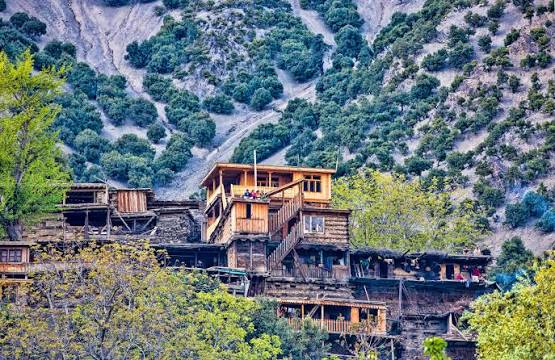
Their villages are distinctive, too. Houses of timber and stone are built into steep hillsides, often stacked so that one roof becomes another house’s terrace. The landscape has shaped not just their economy, but the physical form of their settlements. 7/n https://t.co/wR8QPpDG
11.8K views · 148 likes · 1 reposts · 1 replies Open on X →
Traditionally, Kalash life combined terraced farming with goat herding. Animals were moved seasonally between lower settlements and high summer pastures, while irrigation channels made cultivation possible on steep mountain slopes. 6/n https://t.co/U54mWXVB1C
12.3K views · 143 likes · 1 reposts · 1 replies Open on X →
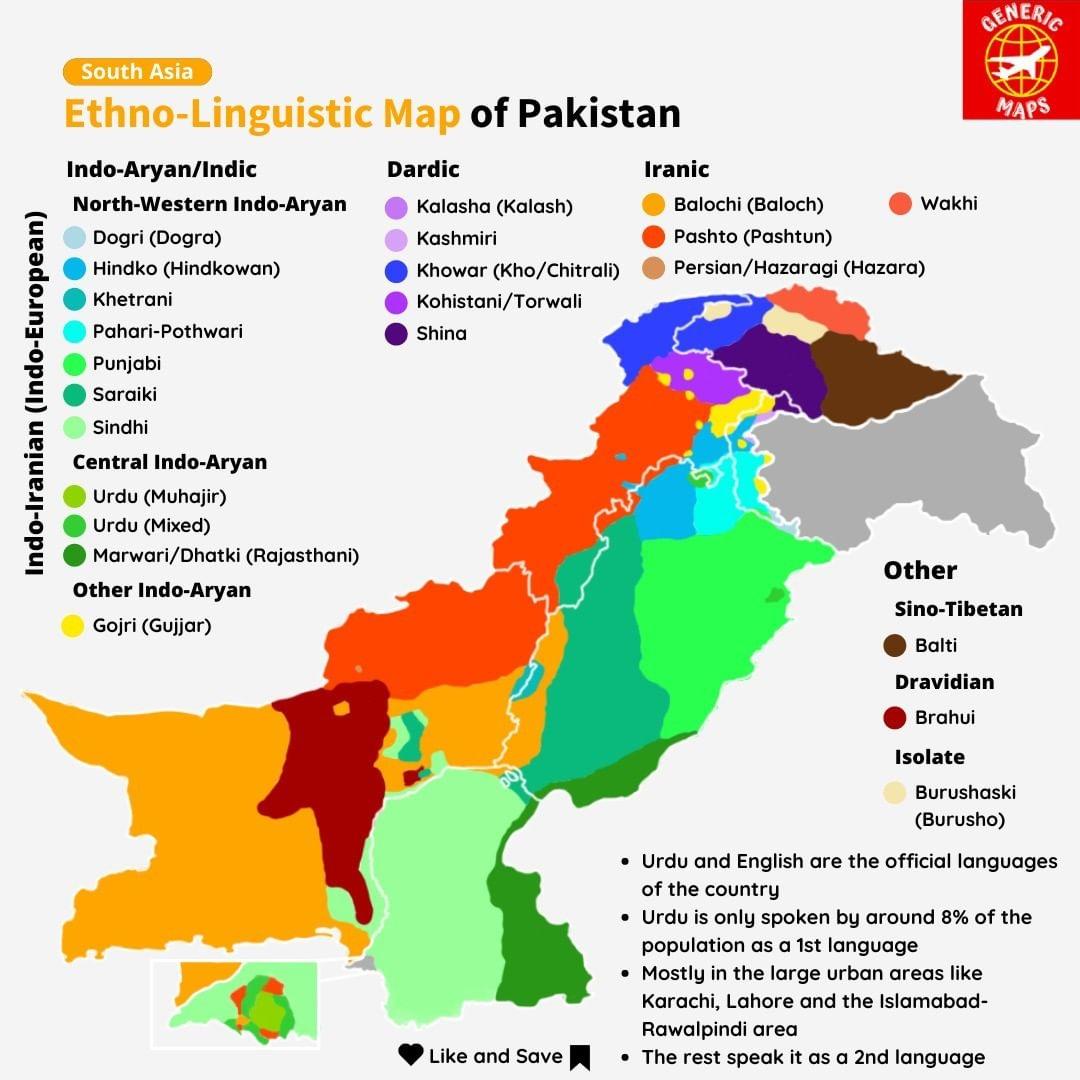
Their language, Kalasha, belongs to the Indo-Aryan branch of Indo-European. It is another clue to their deep regional roots: they are not some mysterious European colony in Asia, despite persistent myths claiming descent from Alexander the Great’s soldiers. 5/n https://t.co/iiD
25.5K views · 169 likes · 4 reposts · 2 replies Open on X →
Their religion includes multiple deities, spirits, sacred places, and elaborate ideas of purity and pollution. Seasonal festivals remain central to community life, tied closely to agriculture, livestock, and the mountain environment. 4/n https://t.co/9xTAZCpivO
14.1K views · 158 likes · 1 reposts · 2 replies Open on X →
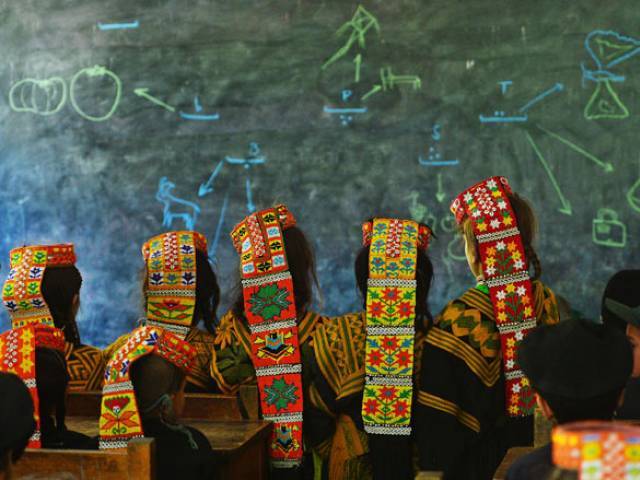
The geography, of course, matters a lot. For centuries, the valleys sheltered the Kalash from the political and religious changes transforming the wider region. While surrounding populations became Muslim, the Kalash retained a pre-Islamic religious tradition. 3/n https://t.co/
Two Kalash children pose, wearing vibrant traditional attire and hats, against a rustic classroom backdrop with wooden furniture.

Source: https://www.laurewanders.com/kalash-valleys-chitral/
13.9K views · 167 likes · 4 reposts · 1 replies Open on X →
The Kalash live mainly in the Bumburet, Rumbur and Birir valleys of Chitral, in the Hindu Kush near the Afghan border. There are only around 4,000 of them. Their isolation is pure geography: steep mountains, narrow valleys, and difficult access. 2/n https://t.co/c3a65AsWMF
15.8K views · 155 likes · 2 reposts · 2 replies Open on X →
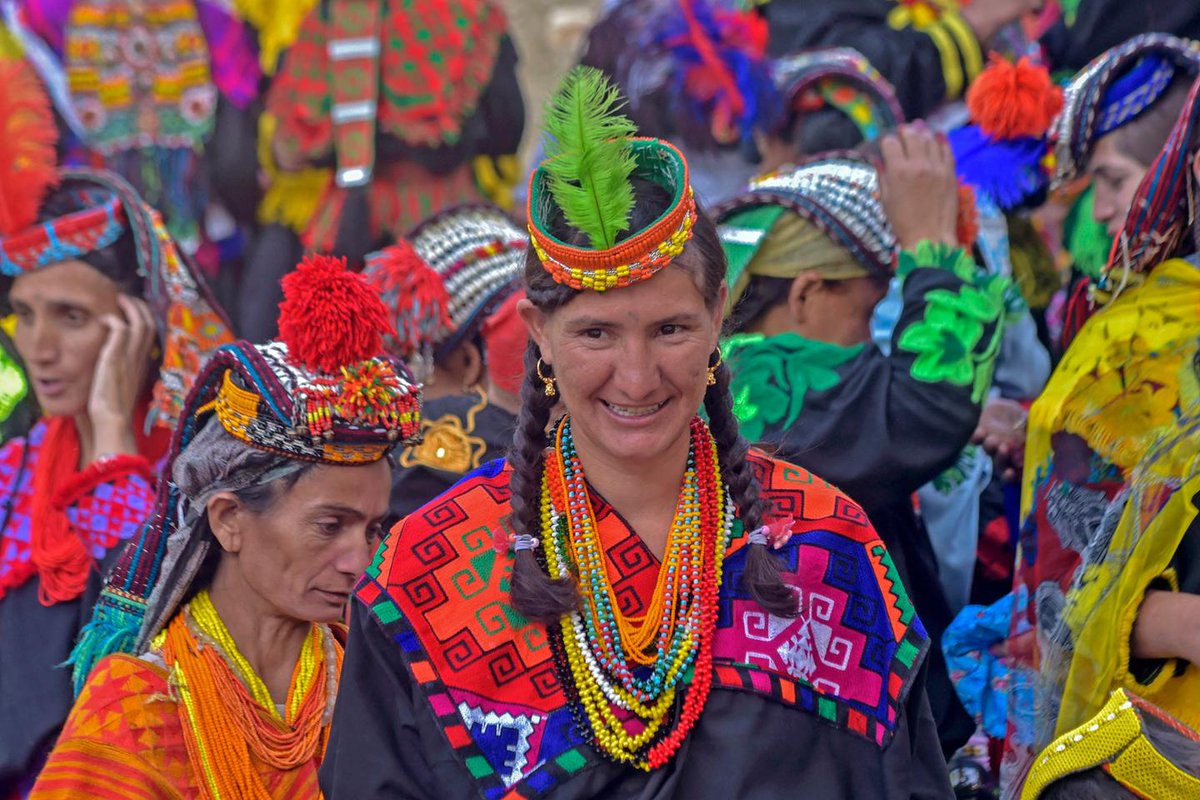
Deep in three valleys of northern Pakistan lives one of Asia’s most unusual peoples. They speak an Indo-Aryan language, practise a non-Islamic, polytheistic religion, and have preserved traditions unlike those of almost everyone around them. They are the ‘Kalash’. 1/n https://t
Women in vibrant traditional attire, adorned with intricate accessories, gather for a cultural celebration in northern Pakistan's valleys. 
https://www.lemonde.fr/en/international/article/2025/11/05/secluded-kalash-tribe-fights-for-survival-in-pakistan_6747153_4.html?srsltid=AfmBOor3z2LBOaChUzHC6OuDGlx_jyeeXVChIy2DTNmd4Ou-3dO0bwjO
105.8K views · 1.1K likes · 99 reposts · 17 replies Open on X →
The so-called Skeleton Coast of Angola and Namibia is notoriously harsh, largely devoid of life. Hundreds of miles of featureless desert stretch along the African coast. But on one tiny island called Baía dos Tigres, there is a ghost town of what was once a thriving town. 1/n h
53.8K views · 661 likes · 28 reposts · 10 replies Open on X →
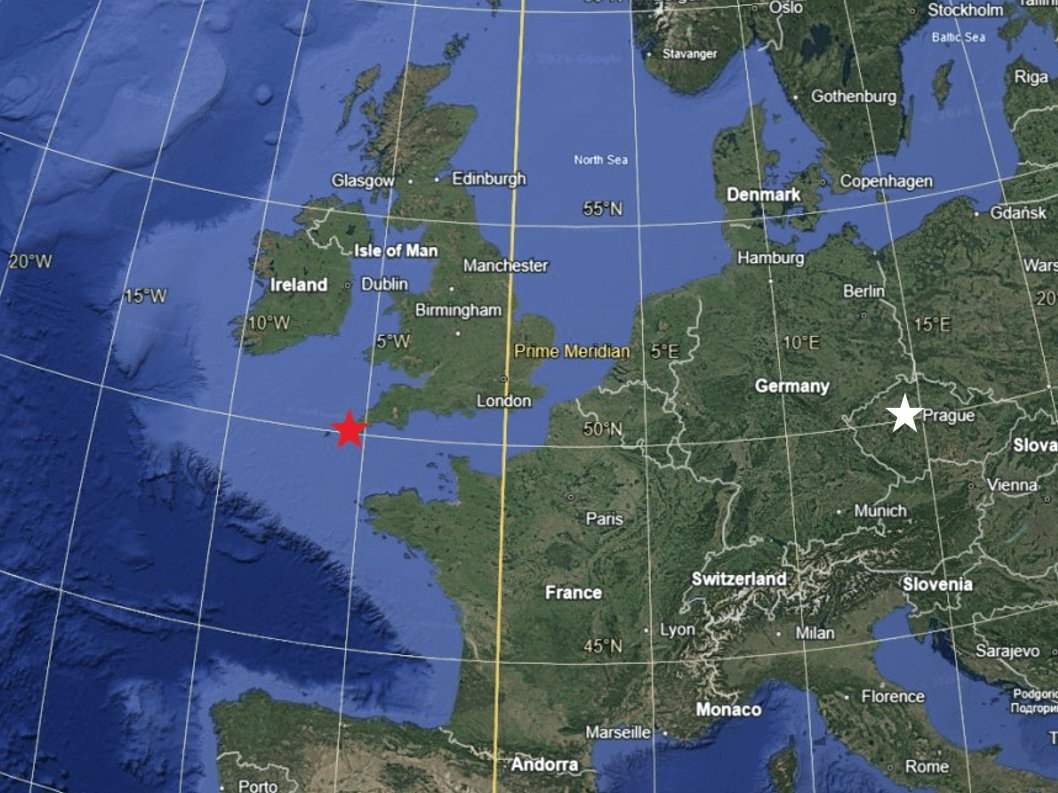
Another map in the series of "that can't possibly be true", but is. Penzance in Cornwall is as far south as Prague in the Czech Republic. https://t.co/3zNtp9e9dN
46.9K views · 846 likes · 30 reposts · 34 replies Open on X →
Look at this ~500 mi (800 km) channel winding across the deep Sea of Japan. It looks like a river. But it sits thousands of metres underwater, and much of what shapes it begins… …on land. 1/n https://t.co/iADRXyRjUM
41.6K views · 340 likes · 15 reposts · 4 replies Open on X →
Saw this old bike again at the weekend, growing from a sycamore tree in the southern Highlands. It is alleged the bike was left hanging on a branch by a villager as he went off to fight in. WW1. He never returned, and his fellow villagers didn’t touch the bike out of respect. htt
17.4K views · 459 likes · 35 reposts · 10 replies Open on X →
High in the Indian Himalayas, more than 5,000 m (16,400 ft) above sea level, lies a tiny lake called Roopkund. For much of the year it is frozen. But, when the ice melts, something bizarre appears: Hundreds of human skeletons emerge, from different eras. 1/n https://t.co/Vqk6l
228.1K views · 1.4K likes · 128 reposts · 39 replies Open on X →
@theiaincameron Georg Leo Graf v Caprivi de Caprera de Montecuccoli was a German general and statesman who served as Chancellor of the German Empire from March 1890 - October 1894, succeeding Otto v Bismarck. He was born in Charlottenburg into a Prussian noble family of Italian/S 421 views · 2 likes · 1 reposts · 0 replies Open on X →
@theiaincameron Bro, no. The Germans knew about the Victoria Falls at least 100 years before this. And, they also had basic geographical common sense. Obviously the Zambezi was gonna drop massive altitude. They were gonna portage and build eventually locks/canal around th 68.9K views · 272 likes · 1 reposts · 12 replies Open on X →
The Caprivi looks nothing like the Namibia most imagine. Not desert, but wetlands fed by the Okavango, Kwando, Chobe, and Zambezi, alive with wildlife. It exists thanks to a questionable colonial bid to reach the Indian Ocean. /END https://t.co/ke5Nj6vsAF 99.6K views · 922 likes · 17 reposts · 8 replies Open on X →
The result survives on the map today. The Caprivi Strip is around 450km long but in places only about 30km wide, squeezed between Angola and Zambia to the north and Botswana to the south. At its eastern end, Namibia comes extraordinarily close to Zimbabwe. 4/n https://t.co/88I 109.5K views · 542 likes · 8 reposts · 5 replies Open on X →
The idea was that the Zambezi might provide a route eastwards towards Germany’s colonies on the Indian Ocean. There was, however, a fairly substantial obstacle that appears to have been missed. About 70km downstream lay Victoria Falls, followed by rapids and gorges. Not https: 115.4K views · 640 likes · 14 reposts · 4 replies Open on X →
In 1890, Germany controlled what is now Namibia. Under an agreement with Britain, it acquired the thin corridor to the Zambezi River, giving German South West Africa access to one of Africa’s great waterways. The strip was named after Chancellor Leo von Caprivi. 2/n https://t. 120.3K views · 483 likes · 8 reposts · 2 replies Open on X →
Have you ever wondered why Namibia has a bizarre, 450km-long (280 mi) strip of land sticking out of its top-right corner? It’s called the Caprivi Strip. It exists largely because 19th-century Germany wanted access to a river, without understanding what lay downstream… 1/n http 947.4K views · 3K likes · 185 reposts · 64 replies Open on X →

Em comparação com contas do mesmo porte

23 posts dos últimos 90 dias, ao lado da faixa de 100K–1M seguidores. aparece para mais gente do que contas do mesmo porte.

Mediana de visualizações25 499esta conta5 983mediana para 100K–1M
Alcance, %18.75%esta conta1.49%mediana para 100K–1M
Engajamento, %1.01%esta conta0.93%mediana para 100K–1M
MétricaEsta contaMediana para 100K–1MProporção
Mediana de visualizações por post25 4995 9834.26×
Alcance (visualizações ÷ seguidores)18.75%1.49%12.6×
Taxa de engajamento1.01%0.93%1.08×

Outras contas desta faixa →   Comparar com outra conta →   Como estas referências são construídas →

Growth & engagement

How the posts we collected actually performed: views and reaction rate post by post, what the audience did with them, and where the follower count goes.

Views per post

41.6K9 Sep
46.9K
53.8K
105.8K13 Sep
15.8K
13.9K
14.1K
25.5K
12.3K
11.8K
11K
13.5K
12.9K
7.1K

Last 14 collected posts, oldest on the left. The scale is logarithmic: one post can outrun the rest a hundred times over.

Engagement rate per post

0.86%9 Sep
1.94%
1.30%
1.13%13 Sep
1.01%
1.24%
1.15%
0.69%
1.18%
1.28%
1.43%
1.18%
2.23%
0.35%

Reactions — likes, reposts, replies and quotes — divided by views. Median for 100K–1M accounts is 0.93%.

What the audience does

Likes81.5%12 193 in total
Reposts4.0%591 in total
Replies1.5%230 in total
Quotes0.2%24 in total
Bookmarks12.8%1 922 in total

Share of every reaction we collected for this account. Replies mean argument, reposts mean endorsement, bookmarks mean the post was worth keeping.

The follower curve appears once this account has two daily snapshots — we take one a day, and this one is on its first.

Contas semelhantes