tweetindex
TH

Space Telescope Science Institute

@SpaceTelescope · Baltimore, MD · joined 17 Jun 2008

Mission Operations Center for NASA's Webb Space Telescope (#NASAWebb). Science operations for the Hubble Space Telescope and Nancy Grace Roman Space Telescope.

337 332Followers
861Following
5 522Posts total
93.3KViews on collected posts

โพสต์ล่าสุด

Baltimore City Public Schools alumni carry a universe-sized impact. Decades before contemporary engineers took the reins to operate cutting-edge observatories, City Schools trailblazers were pioneering technologies and shaping critical NASA missions. https://t.co/jmtJW5hIa3 5.5K views · 20 likes · 4 reposts · 0 replies Open on X →
On Tuesday, September 22, Dr. Emily Rickman (European Space Agency and Space Telescope Science Institute) will chat about #NASARoman's coronagraph instrument, which will help scientists continue their dive into the unknown of imaging alien worlds. https://t.co/fg9hEGa0E8 9.6K views · 45 likes · 9 reposts · 3 replies Open on X →
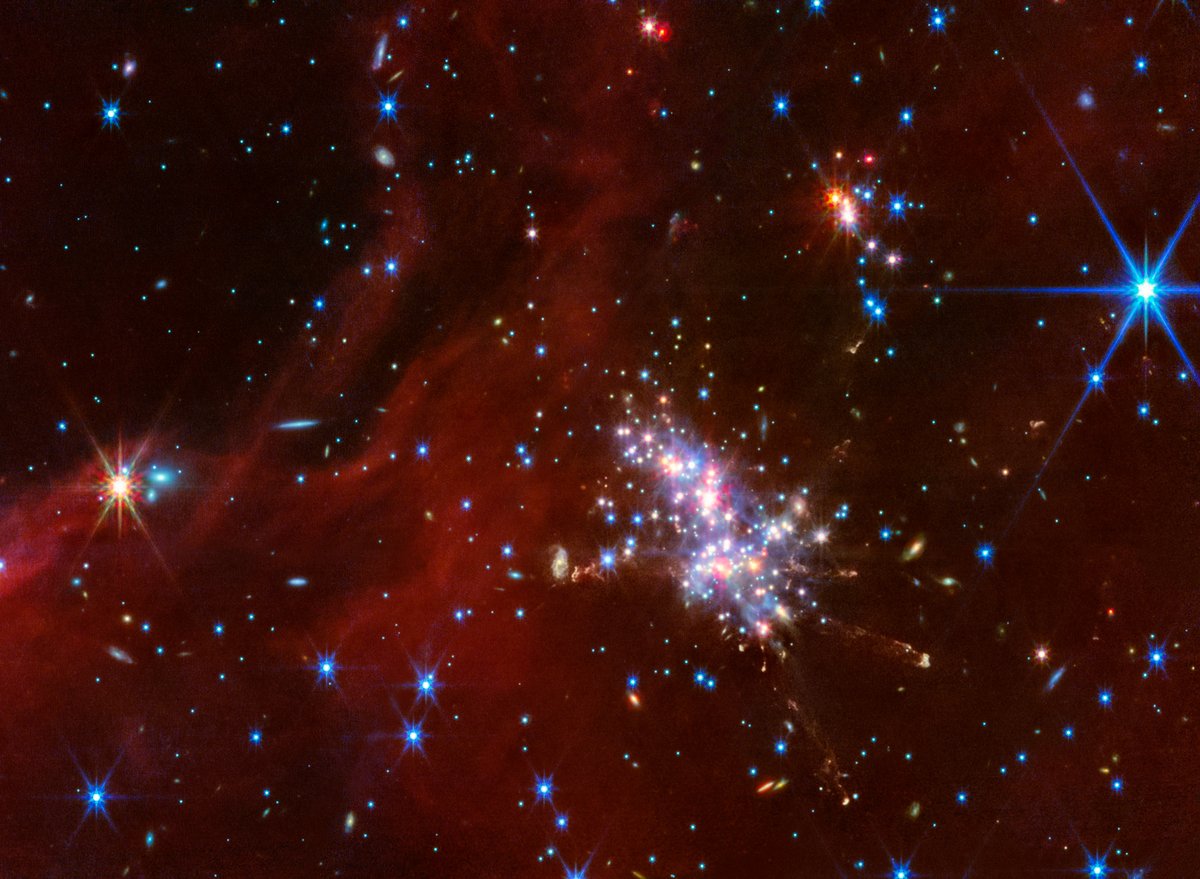
Scientists call this region the Extreme Outer Galaxy due to its location at the edge of our Milky Way. It contains two massive molecular clouds from which clusters of stars are actively forming, as captured in this #NASAWebb image: https://t.co/BiJBsbaKMZ https://t.co/VIVwST7PER
A star-forming region. At center right is a compact star cluster composed of luminous red, blue, and white points of light. Faint jets with clumpy, diffuse material extend in various directions from the bright cluster. Above and to the right is a smaller cluster of stars. Translucent red wisps of material stretch across the scene. Background galaxies are scattered across this swath of space, appearing as small blue-white and orange-white dots or fuzzy, thin disks.
10.2K views · 233 likes · 32 reposts · 7 replies Open on X →
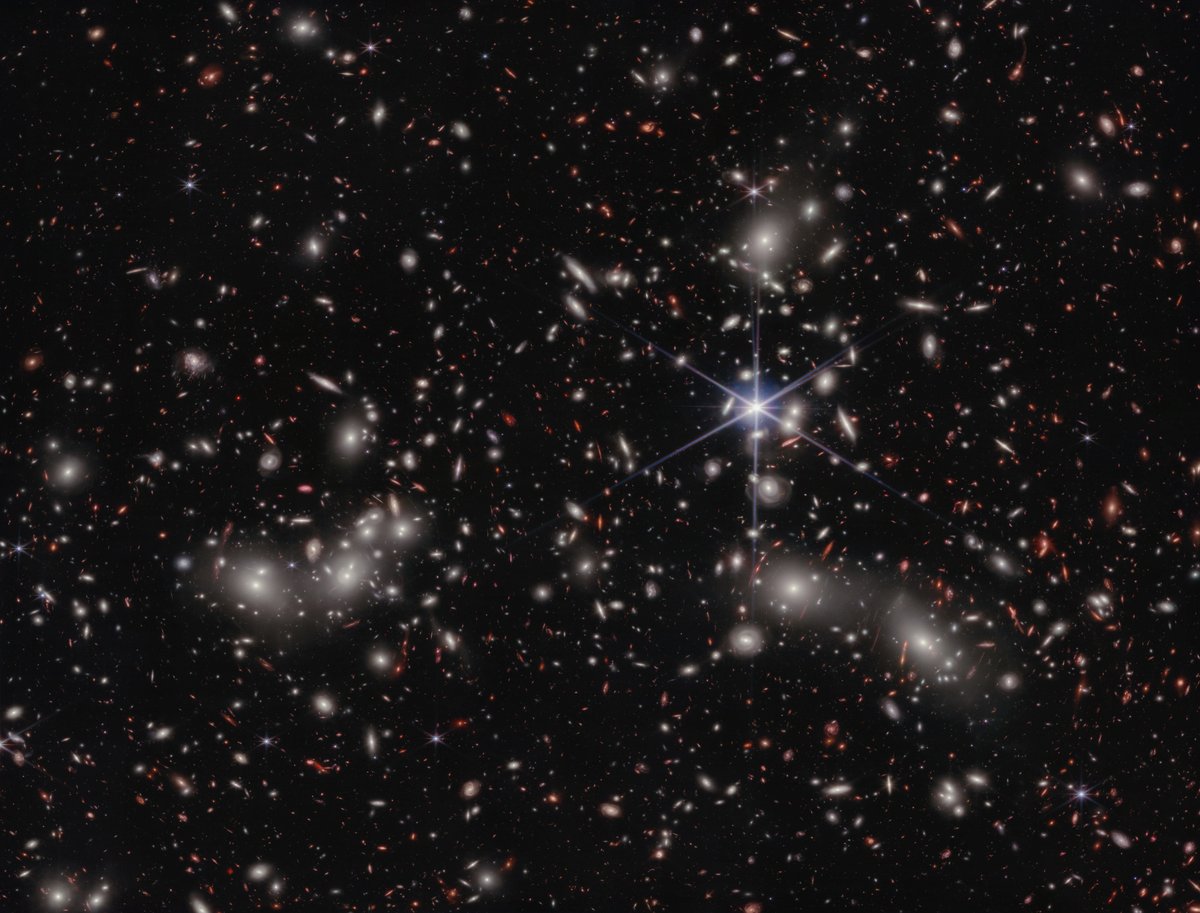
STScI scientists are members of the collaboration that has been awarded the 2027 Berkeley Prize for their work with the UNCOVER project. This #NASAWebb program revealed “little red dots” are dusty black holes in the early universe: https://t.co/pXH45vZ2ad https://t.co/kvcy7Z7bdC
A crowded galaxy field on a black background, with one large star dominating just right of center. Three areas are concentrated with larger white hazy blobs on the left, lower right, and upper right above the single star. Scattered between these areas are many smaller sources of light; some also have a hazy white glow, while many others are red or orange. Even without zooming in, different galaxy shapes are detectable, like spirals, ovals, and arcs.
10.8K views · 188 likes · 19 reposts · 1 replies Open on X →
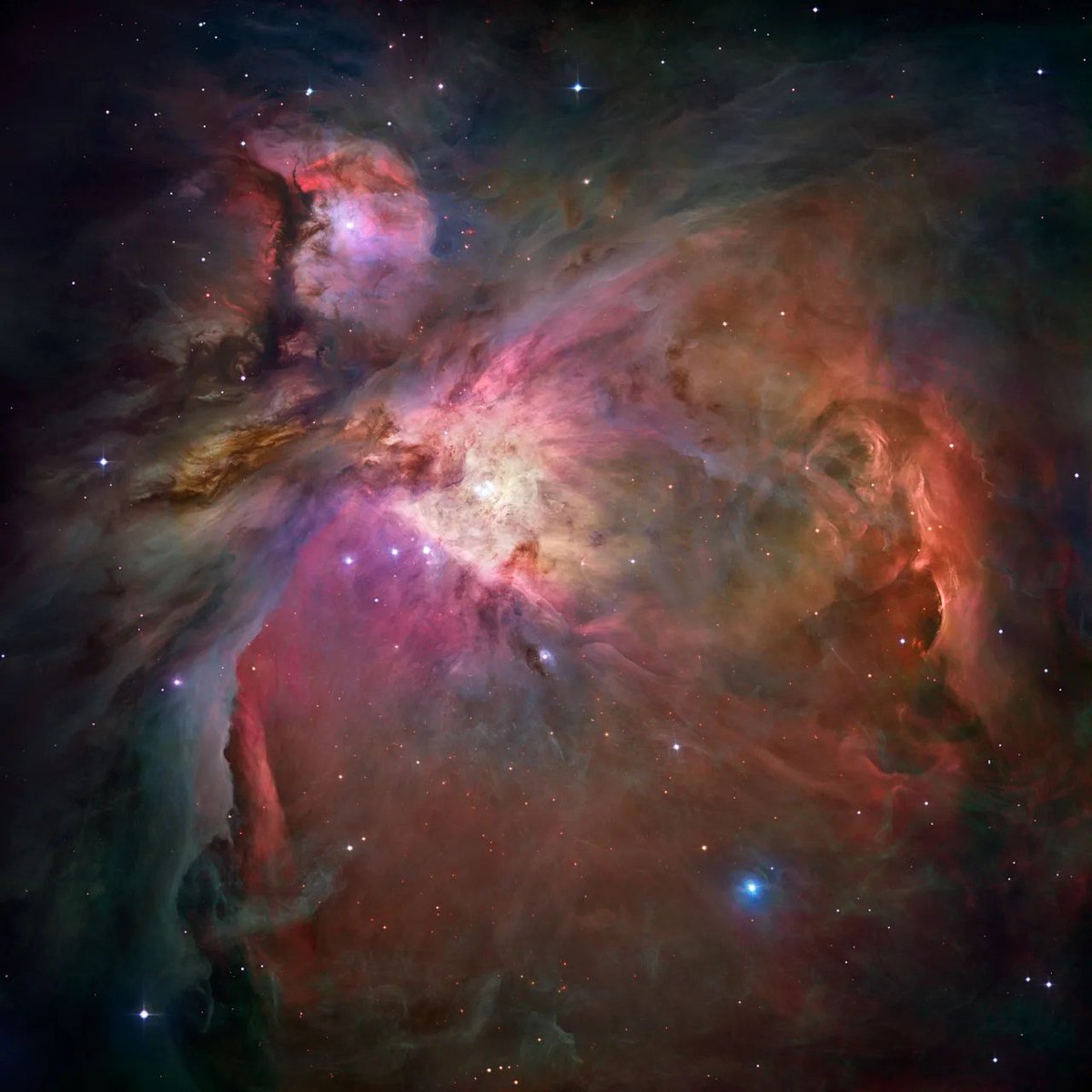
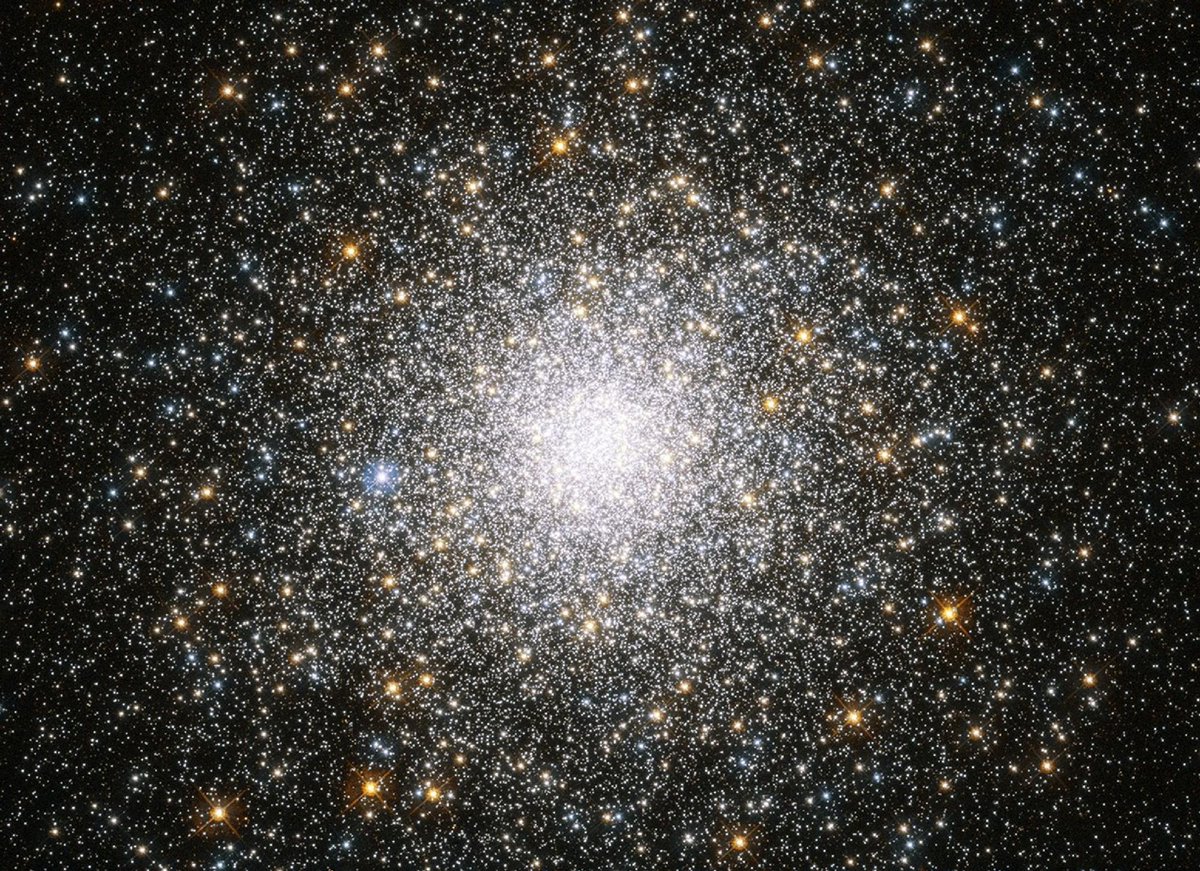
Hubble has observed many Messier catalog items over 35+ years, including the Orion Nebula, the Omega Nebula, globular star cluster Messier 75, and galaxy Messier 109. Scroll through Hubble’s Messier images, and find your favorite: https://t.co/G8MuLavcm7 🔭 https://t.co/XO4MGqSjWI
Messier 42: A vibrant and colorful image of the Orion Nebula, showcasing swirling clouds of gas and dust in hues of purple, pink, and orange, dotted with bright stars. The nebula is set against a dark cosmic background.
Messier 17: The Omega Nebula features a dense field of stars and interstellar dust clouds. The image showcases vibrant blues, with bright stars scattered throughout the nebula.
Messier 75: A densely packed star cluster, known as Messier 75 (M75), fills the image. The center radiates brightly with numerous stars, surrounded by a halo of smaller, glimmering stars. The background is black.
Messier 109: A large spiral galaxy with a bright core surrounded by swirling dust and stars. The image depicts various shades of blue, illustrating large dust lanes and bright groups of stars.
10.5K views · 298 likes · 40 reposts · 2 replies Open on X →
@SpaceTelescope Why not use @NASARoman? 50 views · 0 likes · 0 reposts · 1 replies Open on X →
@SpaceTelescope Shadow is off-centre a bit, Looks like the collimation screws need to be adjusted. Hopefully you don’t need to send an astronaut with a screwdriver! 164 views · 1 likes · 0 reposts · 0 replies Open on X →
@SpaceTelescope 👏🏻👏🏻👏🏻👏🏻🔥✨ 142 views · 1 likes · 0 reposts · 0 replies Open on X →
#NASARoman activated the Wide Field Instrument—a 300-megapixel infrared camera that will allow it to explore wide swaths of the cosmos. This test image captures the very first photons of starlight to reach the instrument—taken as performance assessment: https://t.co/PcJoaUJa2b ht
At the top, a grid of 21 panels shows a series of blue images with tiny neon green and yellow circles. A larger image highlights a section of the grid with circular patterns, and an inset presents a detailed star-like diffraction pattern. The colors consist of blue, green, and yellow.
14.7K views · 359 likes · 61 reposts · 4 replies Open on X →
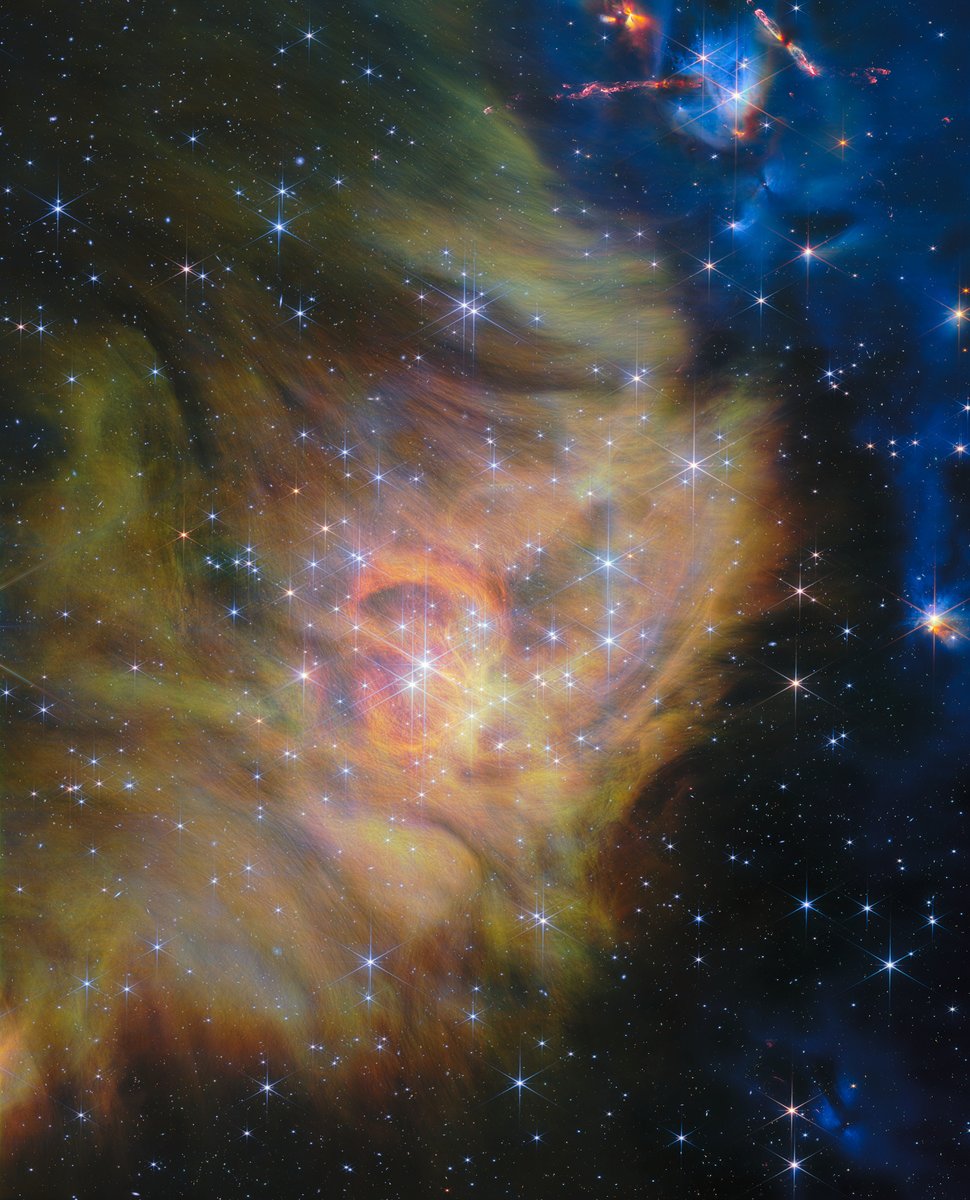
This starry view of the nearby star-forming region IC 348 sits just 1,000 light-years away in the constellation Perseus. Cold clouds of molecular hydrogen gas collapse to form new stars, creating glowing, sculpted scenes like this one. (1/5) 🧵 https://t.co/P9Qo5psWFc
A star-forming region. The left two thirds is blanketed in thick clouds of green and yellow gas and dust that form swirling patterns. Some of the gas is spread into thin, thread-like wisps. The right third shows a black background speckled with stars and multi-colored dots that are distant galaxies. Bright stars are scattered throughout the clouds, with the densest cluster situated in the center. Each is crowned with six long spikes and two shorter spikes created by the optics of the telescope’s mirrors. In the upper right, a couple of hidden stars blast out long, glowing jets of material that glow in blue.
7.5K views · 225 likes · 26 reposts · 4 replies Open on X →
NEW: One of the largest #NASAWebb images released to date reveals a sweeping view of nearby star forming region IC 348, spanning a whopping 31,000 by 38,000 pixels! Look closely, there’s something to discover in every corner of this stellar nursery: https://t.co/LdCQfu8pyp https:
A star-forming region. The left two thirds is blanketed in thick clouds of green and yellow gas and dust that form swirling patterns. Some of the gas is spread into thin, thread-like wisps. The right third shows a black background speckled with stars and multi-colored dots that are distant galaxies. Bright stars are scattered throughout the clouds, with the densest cluster situated in the center. Each is crowned with six long spikes and two shorter spikes created by the optics of the telescope’s mirrors. In the upper right, a couple of hidden stars blast out long, glowing jets of material that glow in blue.
10.9K views · 250 likes · 42 reposts · 5 replies Open on X →
@SpaceTelescope If Webb’s early black holes / little red dots feel too soon: milder dark-matter ripples + a still-hot CMB can force gas to collapse straight into a black hole — before starlight. 1 views · 0 likes · 0 reposts · 0 replies Open on X →
@SpaceTelescope https://t.co/wLnq8yLnWZ
34 views · 0 likes · 0 reposts · 0 replies Open on X →
🚨 Our fascinating Public Lecture Series is now on YouTube! We now have the 2017-2025 lectures available to watch. https://t.co/h3po4po4pB 13.1K views · 38 likes · 13 reposts · 6 replies Open on X →

เทียบกับบัญชีขนาดเดียวกัน

12 โพสต์จาก 90 วันที่ผ่านมา เทียบกับช่วง 100K–1M ผู้ติดตาม แสดงไปไกลเกินผู้ติดตามของตัวเอง และผู้ชมก็ตอบสนอง.

ยอดดูมัธยฐาน8 584บัญชีนี้6 548ค่ามัธยฐานของ 100K–1M
การเข้าถึง, %2.54%บัญชีนี้1.65%ค่ามัธยฐานของ 100K–1M
การมีส่วนร่วม, %1.96%บัญชีนี้0.97%ค่ามัธยฐานของ 100K–1M
ตัวชี้วัดบัญชีนี้ค่ามัธยฐานของ 100K–1Mอัตราส่วน
ยอดดูมัธยฐานต่อโพสต์8 5846 5481.31×
การเข้าถึง (ยอดดู ÷ ผู้ติดตาม)2.54%1.65%1.54×
อัตราการมีส่วนร่วม1.96%0.97%2.02×

บัญชีอื่นในช่วงนี้ →   เปรียบเทียบกับบัญชีอื่น →   ค่าอ้างอิงเหล่านี้คำนวณอย่างไร →

Growth & engagement

How the posts we collected actually performed: views and reaction rate post by post, what the audience did with them, and where the follower count goes.

Views per post

13.1K8 Apr
3422 Jun
110 Sep
10.9K15 Sep
7.5K
14.7K
142
164
5016 Sep
10.5K
10.8K17 Sep
10.2K18 Sep
9.6K
5.5K

Last 14 collected posts, oldest on the left. The scale is logarithmic: one post can outrun the rest a hundred times over.

Engagement rate per post

0.44%8 Apr
0.00%22 Jun
0.00%10 Sep
2.74%15 Sep
3.39%
2.91%
0.70%
0.61%
2.00%16 Sep
3.27%
1.92%17 Sep
2.67%18 Sep
0.59%
0.44%

Reactions — likes, reposts, replies and quotes — divided by views. Median for 100K–1M accounts is 0.97%.

What the audience does

Likes78.8%1 658 in total
Reposts11.7%246 in total
Replies1.6%33 in total
Quotes0.6%12 in total
Bookmarks7.4%156 in total

Share of every reaction we collected for this account. Replies mean argument, reposts mean endorsement, bookmarks mean the post was worth keeping.

Followers by day

17 Sep

Daily snapshots since 17 Sep 2026; the dashed line is the starting count.

บัญชีที่คล้ายกัน