tweetindex
FR

Naija

@Naija_PR · Nigeria · joined 24 Sep 2013

News and topic discussions from Nigeria | Email: realnaijapr@gmail.com

7 036 847Followers
86 391Following
422 214Posts total
161KViews on collected posts

Derniers posts

@Naija_PR Above everything, God first bro 51 views · 1 likes · 0 reposts · 0 replies Open on X →
Nigeria’s ₦24.7tn domestic borrowing figure is therefore not simply a story about “more debt.” It is really three stories: Old debt being refinanced. New deficits being financed. And government competing with the private sector for the same pool of money. Understanding which 1.4K views · 0 likes · 0 reposts · 0 replies Open on X →
And for ordinary Nigerians, the effect eventually leaves Abuja. High government borrowing and high yields can influence: • Business loan rates • Mortgage costs • Investment and hiring • Government interest spending • How much revenue remains for public services 1.3K views · 0 likes · 0 reposts · 1 replies Open on X →
Those answers tell you far more about Nigeria’s fiscal position than the gross issuance number alone. Because ₦10tn rolled over at a lower rate can improve the debt profile... while much smaller fresh borrowing at extremely high rates can become expensive. 36 views · 0 likes · 0 reposts · 1 replies Open on X →
So when you see: “FG borrows ₦24.7tn” three questions matter more than the headline: How much replaced old debt? How much is genuinely new borrowing? At what interest rate was the money raised? 36 views · 0 likes · 0 reposts · 1 replies Open on X →
There can be a positive scenario too. If inflation continues falling and market interest rates decline, government may refinance future debt more cheaply. Lower government yields can also make lending to businesses relatively more attractive again. 34 views · 0 likes · 0 reposts · 1 replies Open on X →
High government borrowing can also interact with monetary policy. If inflation is high and the CBN maintains tight financial conditions, yields across the economy can remain elevated. Government then refinances debt in an expensive interest-rate environment. 37 views · 0 likes · 0 reposts · 1 replies Open on X →
That creates a refinancing risk. Government may successfully repay a maturing bond... …but replace it with a new bond carrying a significantly higher interest rate. The debt has been rolled over, yet the future annual interest bill becomes heavier. 36 views · 0 likes · 0 reposts · 1 replies Open on X →
Nigeria already spends a large share of government revenue servicing debt. As older, cheaper securities mature and are refinanced at higher yields, the average cost of the debt portfolio can increase even without an equally dramatic increase in principal. 36 views · 0 likes · 0 reposts · 1 replies Open on X →
Multiply that across trillions of naira and debt servicing becomes enormous. This is why the interest rate at which government borrows can matter almost as much as the amount borrowed. Cheap debt and expensive debt create very different fiscal burdens. 43 views · 0 likes · 0 reposts · 1 replies Open on X →
The price is particularly important. When government borrows at high yields today, taxpayers inherit those interest payments tomorrow. A ₦1tn bond at 10% interest costs roughly ₦100bn annually before principal repayment. At 20%, that becomes about ₦200bn. 50 views · 0 likes · 0 reposts · 1 replies Open on X →
There is another side. Government borrowing is not automatically harmful. A functioning bond market gives pension funds and savers relatively secure investment options and helps government finance expenditure without simply creating new money. What matters is the scale, price 37 views · 0 likes · 0 reposts · 1 replies Open on X →
And high interest rates change business decisions. A company considering a new factory might abandon the project if financing becomes too expensive. A small business may avoid taking a loan. A property developer may build fewer houses. Investment slows. 37 views · 0 likes · 0 reposts · 1 replies Open on X →
Businesses can still borrow. But they may have to offer higher interest rates to compete with government for funds. Banks effectively ask: “If government will pay me X%, why should I lend to your company for less?” That can push private-sector borrowing costs upward. 43 views · 0 likes · 0 reposts · 1 replies Open on X →
Economists call the potential result crowding out. Large government borrowing can absorb money that might otherwise finance: • Business expansion • Factory construction • Mortgages • SME loans • Consumer credit 45 views · 0 likes · 0 reposts · 1 replies Open on X →
Government securities are generally considered lower-risk than lending to a private company. So when Treasury Bills or bonds offer very high yields, investors may prefer government paper. Why take more business risk if government will pay an attractive return? 54 views · 1 likes · 0 reposts · 1 replies Open on X →
But government borrowing has consequences. Imagine government enters the market offering attractive returns on Treasury Bills and bonds. Banks and investors now have a choice: Lend to government or Lend to businesses. 60 views · 0 likes · 0 reposts · 1 replies Open on X →
So why borrow so heavily in the domestic market? Government needs cash for: • Budget deficits • Maturing debt • Infrastructure and other spending • Cash-flow management And Nigeria’s pension funds and financial institutions provide a large pool of naira that can buy 60 views · 0 likes · 0 reposts · 1 replies Open on X →
Think of it like a household refinancing a mortgage. If you owe a bank ₦20m and replace that loan with another ₦20m loan, you have borrowed ₦20m again... …but you haven’t suddenly become ₦40m in debt. Government debt rollover works similarly. 68 views · 0 likes · 0 reposts · 1 replies Open on X →
This is why the annual borrowing target matters. If the government’s planned new borrowing for the year is much lower than ₦24.7tn, seeing ₦24.7tn of securities issued does not automatically mean the borrowing target has been exceeded. You have to subtract refinancing. 74 views · 1 likes · 0 reposts · 1 replies Open on X →
But Nigeria is also taking on fresh debt. The 2026 federal budget contains a financing gap that government intends to cover through new domestic and external borrowing. That fresh borrowing increases the outstanding debt stock rather than simply replacing maturing securities. 85 views · 2 likes · 0 reposts · 1 replies Open on X →
That distinction is crucial when looking at the ₦24.7tn figure. It represents total domestic issuance/borrowing activity. It should not automatically be interpreted as ₦24.7tn added to Nigeria’s debt stock. Some of it is replacing obligations government already owed. 102 views · 2 likes · 0 reposts · 1 replies Open on X →
So if government issues ₦1tn of new bonds but ₦700bn is being used to replace bonds that just matured, the debt stock does NOT necessarily increase by the full ₦1tn. The genuinely new borrowing in that example is closer to ₦300bn. 118 views · 2 likes · 0 reposts · 1 replies Open on X →
When an old Treasury Bill or bond matures, government must repay the investor. Instead of finding all that money from tax revenue, government often issues another security. That is called refinancing or rollover. Old debt matures → new debt replaces it. 254 views · 1 likes · 0 reposts · 1 replies Open on X →
Government borrows domestically mainly through instruments such as: • Nigerian Treasury Bills • Federal Government Bonds • Savings Bonds • Other naira-denominated securities Banks, pension funds, asset managers, companies and individuals buy them. 603 views · 2 likes · 0 reposts · 1 replies Open on X →
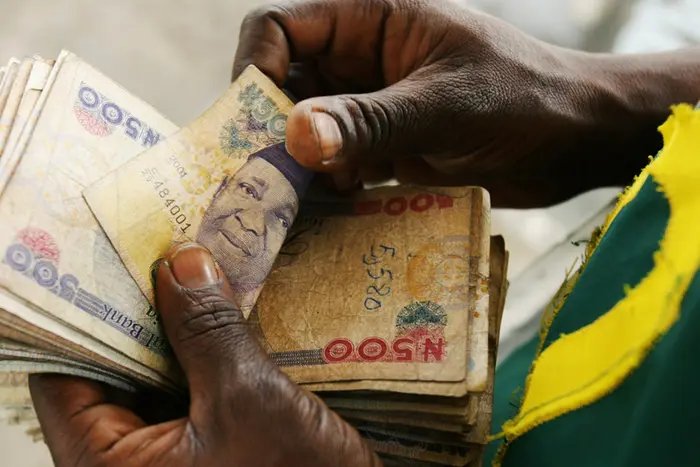
Nigeria’s Federal Government has raised about ₦24.7 trillion from the domestic debt market this year. That sounds like ₦24.7tn of completely new debt. It isn’t. A large part is money borrowed to repay old debt that matured. Here’s the difference. 30.5K views · 64 likes · 4 reposts · 2 replies Open on X →
@Naija_PR Yes sir. God first. 85 views · 1 likes · 0 reposts · 0 replies Open on X →
For many Nigerian businesses, taxation hasn’t meant one clear bill. It can mean several officials, multiple levies, roadblocks and sometimes cash demands with little explanation. Now, 18 states have adopted a system meant to change that. https://t.co/Pkiuadzijq
19.9K views · 21 likes · 4 reposts · 2 replies Open on X →
@Naija_PR Before you speak to people, speak to God first. 🙏🏽 A few quiet moments in prayer can give you the clarity, wisdom and strength to handle whatever the day brings. 58 views · 4 likes · 0 reposts · 0 replies Open on X →
Do this before you talk to anyone daily. https://t.co/RlGSJm4H5V
0:54
55.7K views · 2.1K likes · 346 reposts · 7 replies Open on X →

Face aux comptes de taille comparable

32 posts des 90 derniers jours, à côté de la tranche de 1M–10M abonnés. touche moins de monde que ses pairs, mais les engage bien davantage.

Vues médianes60ce compte16 796médiane pour 1M–10M
Portée, %0.00%ce compte0.77%médiane pour 1M–10M
Engagement, %2.43%ce compte1.06%médiane pour 1M–10M
IndicateurCe compteMédiane pour 1M–10MRapport
Vues médianes par post6016 7960.00×
Portée (vues ÷ abonnés)0.00%0.77%0.00×
Taux d'engagement2.43%1.06%2.30×

Autres comptes de cette tranche →   Comparer avec un autre compte →   Comment ces repères sont établis →

Growth & engagement

How the posts we collected actually performed: views and reaction rate post by post, what the audience did with them, and where the follower count goes.

Views per post

437 Sep
37
37
50
43
36
36
37
34
36
36
1.3K
1.4K
51

Last 14 collected posts, oldest on the left. The scale is logarithmic: one post can outrun the rest a hundred times over.

Engagement rate per post

2.33%7 Sep
2.70%
2.70%
2.00%
2.33%
2.78%
2.78%
2.70%
2.94%
2.78%
2.78%
0.08%
0.00%
1.96%

Reactions — likes, reposts, replies and quotes — divided by views. Median for 1M–10M accounts is 1.06%.

What the audience does

Likes75.5%2 158 in total
Reposts12.4%354 in total
Replies1.2%34 in total
Quotes0.2%5 in total
Bookmarks10.8%309 in total

Share of every reaction we collected for this account. Replies mean argument, reposts mean endorsement, bookmarks mean the post was worth keeping.

The follower curve appears once this account has two daily snapshots — we take one a day, and this one is on its first.

Comptes similaires