tweetindex
EN

NASA Goddard ✓

@NASAGoddard · Greenbelt, MD USA · joined 04 Feb 2009

Welcome to your friendly neighborhood space flight center, home to the largest community of scientists & engineers on Earth.

932 861Followers
143Following
26 098Posts total
558.1KViews on collected posts

Latest posts

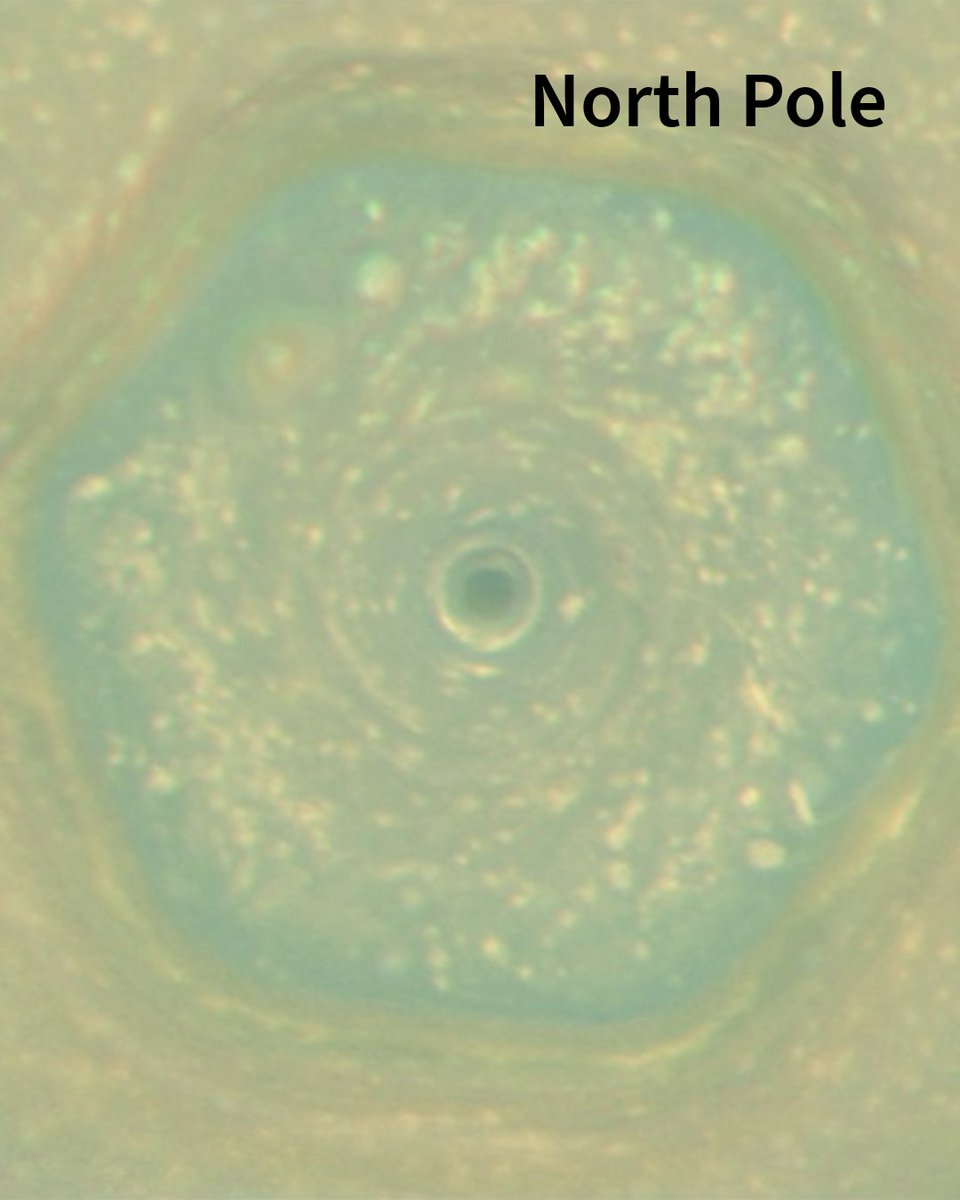
Saturn's famous hexagon now has a sibling 🪐 First spotted decades ago, the six-sided vortex at Saturn's north pole fascinated scientists. Now, @NASAHubble caught a glimpse of an evolving ten-sided atmospheric wave on the ringed planet's south pole. https://t.co/xCtn65zXps
Straight-on view of Saturn, a globe with pale yellow horizontal bands at the equator and orange and pink at the mid-latitudes. Some bands towards the north and south pole have a light blue hue. There are prominent horizontal rings circling at the equator.
View of Saturn's south pole. Mostly tan and concentric bands in its atmosphere surround a dark central region that has a 10-sided outline. A small, dashed circle at the very center of the pole with an “X” inside denotes missing data.
Close up view of Saturn's north pole. There is a central hexagon that is predominantly blue speckled with tan spots and splotches. Beyond the hexagon, Saturn is a hazy green and tan color.
12.1K views · 396 likes · 70 reposts · 4 replies Open on X →
Tiny objects, big history 🪨 Some of the solar system's smallest objects remember how they were made. @NASAHubble & @NASAWebb teamed up to study the ancient origins of these miniature worlds beyond Neptune. Read more about the edge of the solar system: https://t.co/b7UVJuc4CX h
2:38
11.2K views · 234 likes · 46 reposts · 9 replies Open on X →
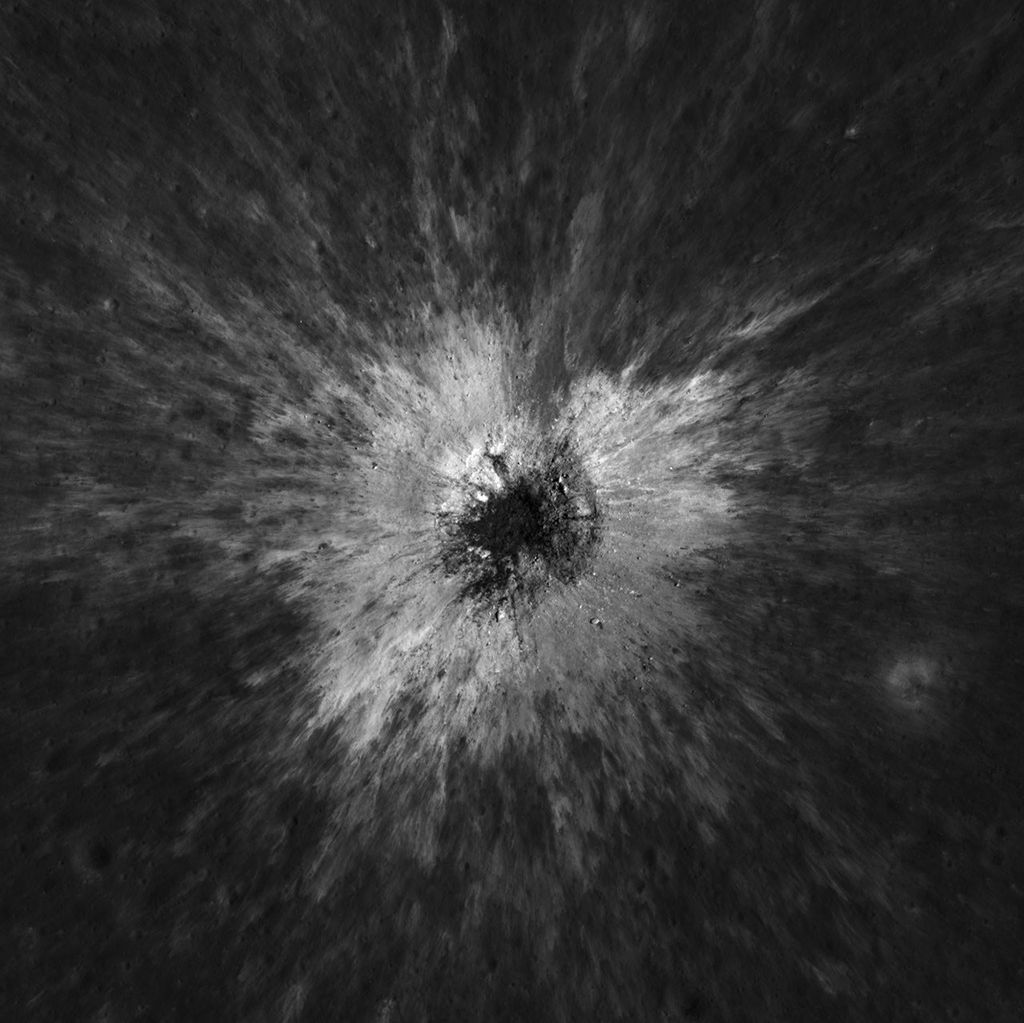
New crater, who's this? Researchers just found the largest newly formed impact crater in the solar system on the Moon. It's a once in a century find made possible by NASA's LRO, which has been orbiting the Moon for 17 years. https://t.co/6TMq17NbbJ https://t.co/pzfeomJnKJ
A mostly circular impact crater sits in the center of a dark, cratered surface, with white rays of ejected lunar material radiating outwards in all directions, creating a stark contrast against the gray terrain. The crater itself is partly shadowed, so it is darker than the ejected material around it.
17.1K views · 564 likes · 91 reposts · 18 replies Open on X →
Tomorrow is International Observe the Moon Night. 🌙 It's easy to get involved: observe the Moon with binoculars, a telescope, or even just look up! Share what you see with us! For more ways to get involved: https://t.co/sjmbFsG9td 19.8K views · 128 likes · 32 reposts · 10 replies Open on X →
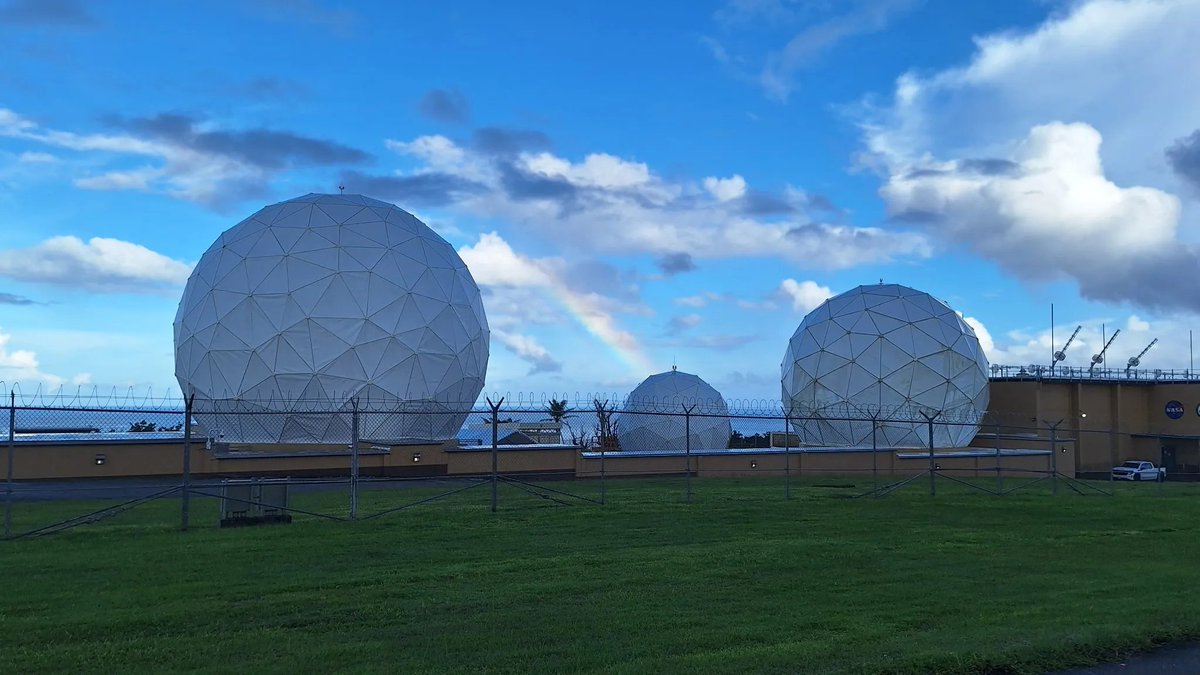
Back in action! 📡 NASA's Guam Remote Station is back online after Typhoon Mawar damaged the site in 2023. Its return restores full coverage for Goddard’s Near Space Network, helping missions send critical science and exploration data back to Earth. https://t.co/AWUjLWfWoW https:/
Three large white spherical radio antennas at the repaired Guam Remote Station stand behind a security fence on a grassy field. A rainbow arcs through the partly cloudy blue sky behind the antennas.
7.6K views · 132 likes · 22 reposts · 7 replies Open on X →
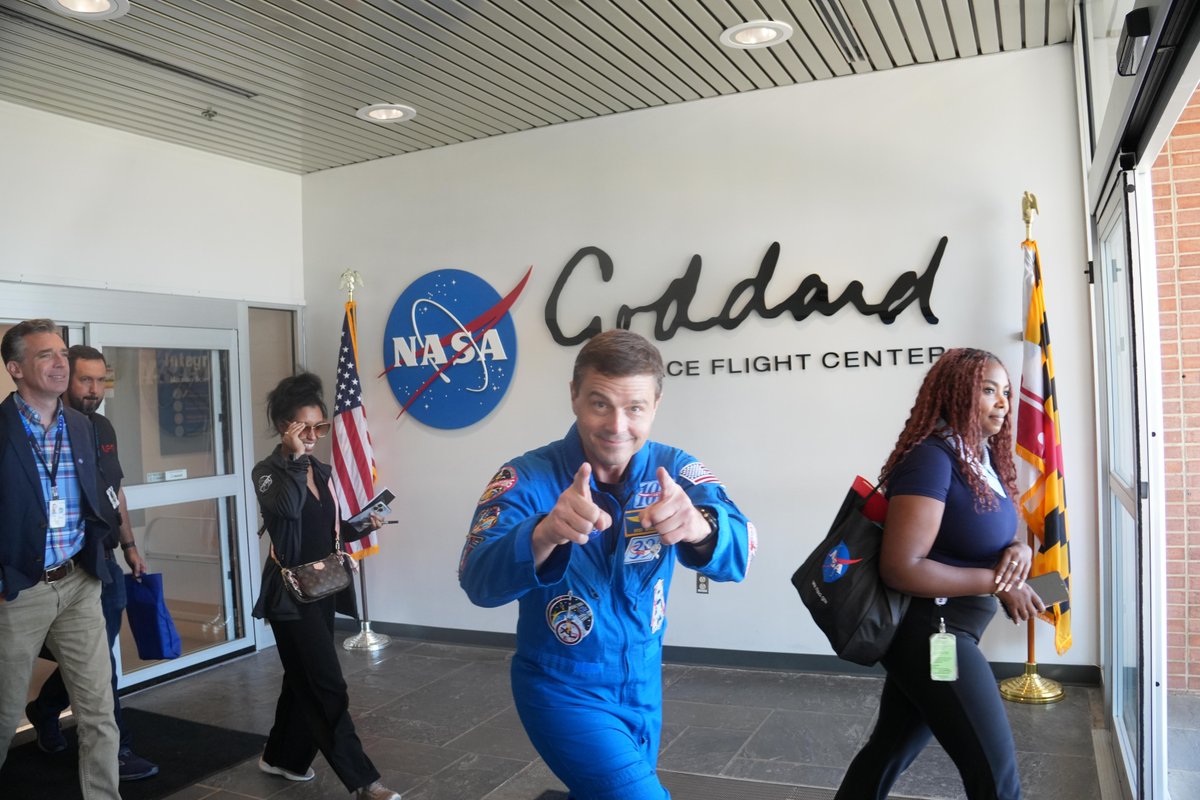
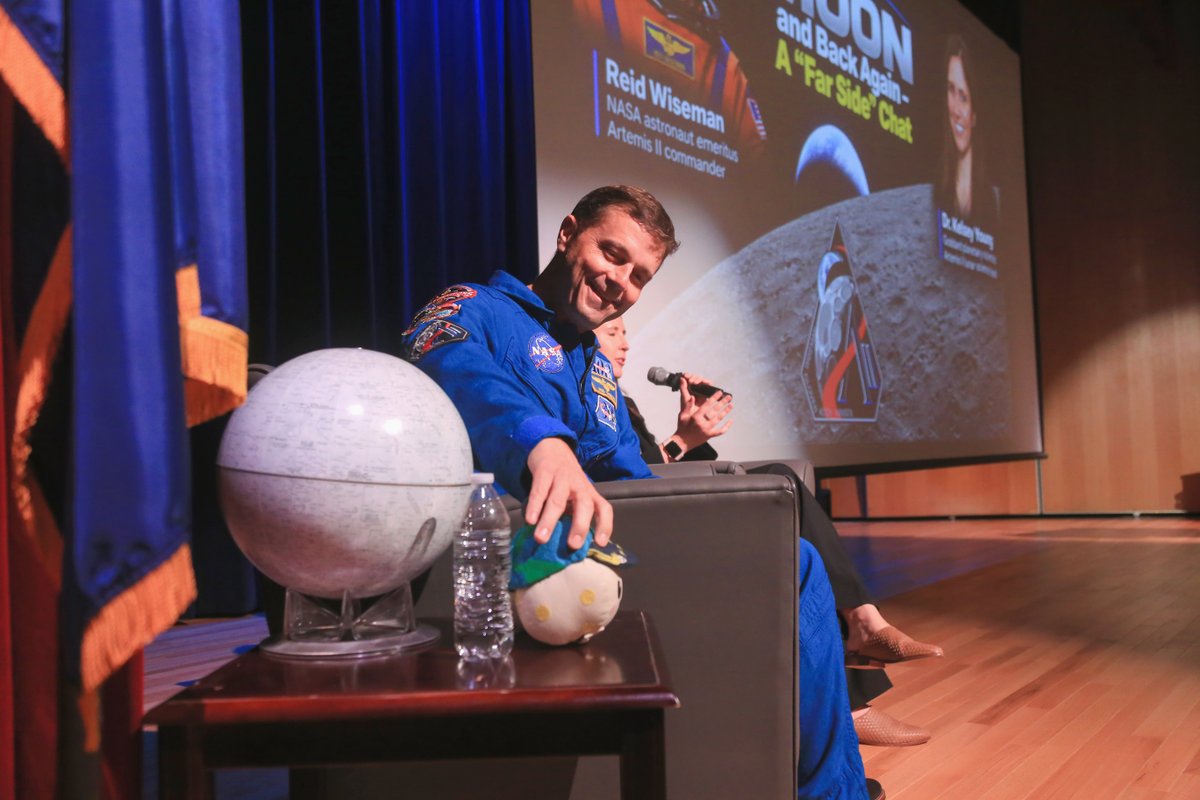
A hometown visit for two members of the @NASAArtemis II crew! Maryland native @Astro_Reid joined us at Goddard for a discussion of lunar science, a tour of some of our future missions, and to see the center where his pal Rise was fabricated. https://t.co/QnHIuE8F6P
Reid Wiseman exiting a building through sliding glass doors. Reid has a beaming smile on his face, hunching down to point enthusiastically at the camera. Behind him is a big Goddard logo, a U.S. flag, and a Maryland flag.
Reid Wiseman putting his hand in with a crowd of Goddard employees, all reaching toward the center. They are all standing up and smiling. Many people are visible reaching toward the hands in spot in the background.
Reid Wiseman sitting on a stage, taken from the side. He is looking down in the direction of the camera, at a small Rise zero gravity indicator, which he is picking up. A Moon globe sits next to Rise on the table.
15.4K views · 422 likes · 44 reposts · 9 replies Open on X →
Massive stars don’t just live in their environment—they shape it. In nebula N44, stellar winds and supernovae from enormous stars carved out a giant central void, pushing cold gas into an outer shell where a new generation of stars are forming. https://t.co/oAa4meURmY https://t.
A dense field of stars fills the image, surrounded by wispy clouds of gas and dust. Pale blue and grey nebulosity forms an intricate web across the scene, with darker clouds of dust concentrated towards the lower right. Numerous bright stars appear in shades of blue, white, and orange.
21K views · 876 likes · 156 reposts · 7 replies Open on X →
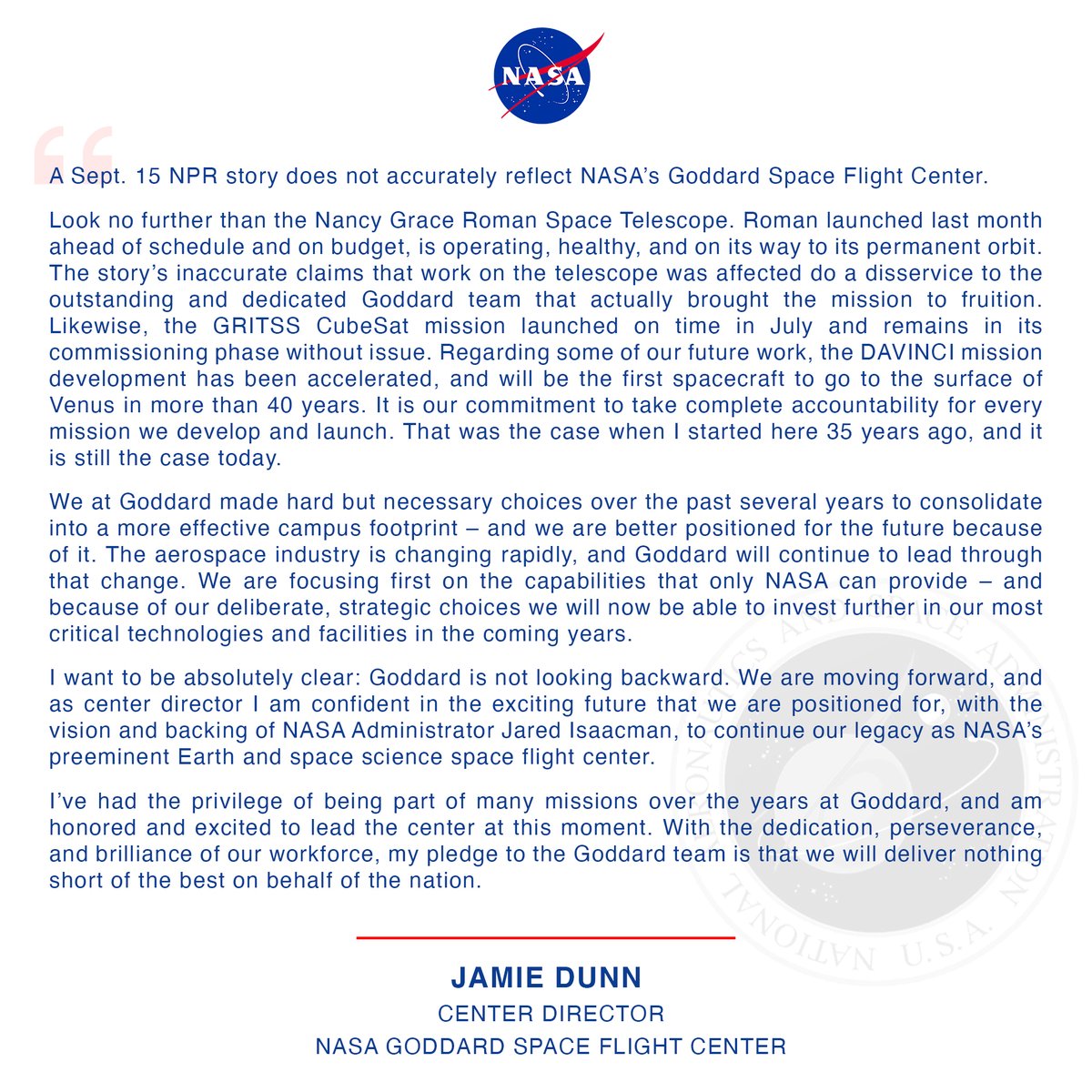
A Statement from the Director of NASA’s Goddard Space Flight Center A Sept. 15 NPR story does not accurately reflect NASA’s Goddard Space Flight Center. Look no further than the Nancy Grace Roman Space Telescope. Roman launched last month ahead of schedule and on budget, is htt
A Statement from the Director of NASA’s Goddard Space Flight Center Jamie Dunn

A Sept. 15 NPR story does not accurately reflect NASA’s Goddard Space Flight Center.

Look no further than the Nancy Grace Roman Space Telescope. Roman launched last month ahead of schedule and on budget, is operating, healthy, and on its way to its permanent orbit. The story’s inaccurate claims that work on the telescope was affected do a disservice to the outstanding and dedicated Goddard team that actually brought the mission to fruition. Likewise, the GRITSS CubeSat mission launched on time in July and remains in its commissioning phase without issue. Regarding some of our future work, the DAVINCI mission development has been accelerated, and will be the first spacecraft to go to the surface of Venus in more than 40 years. It is our commitment to take complete accountability for every mission we develop and launch. That was the case when I started here 35 years ago, and it is still the case today.
53.3K views · 979 likes · 127 reposts · 29 replies Open on X →
The universe is expanding. That expansion is accelerating. Something is driving it. It’s called dark energy, but what is it? Roman just launched to help answer this question. It will map billions of galaxies to investigate how dark energy has shaped the cosmos. https://t.co/LTHG
4:14
20.8K views · 365 likes · 78 reposts · 15 replies Open on X →
It is Rocket Frog week my dudes 30.7K views · 455 likes · 75 reposts · 16 replies Open on X →
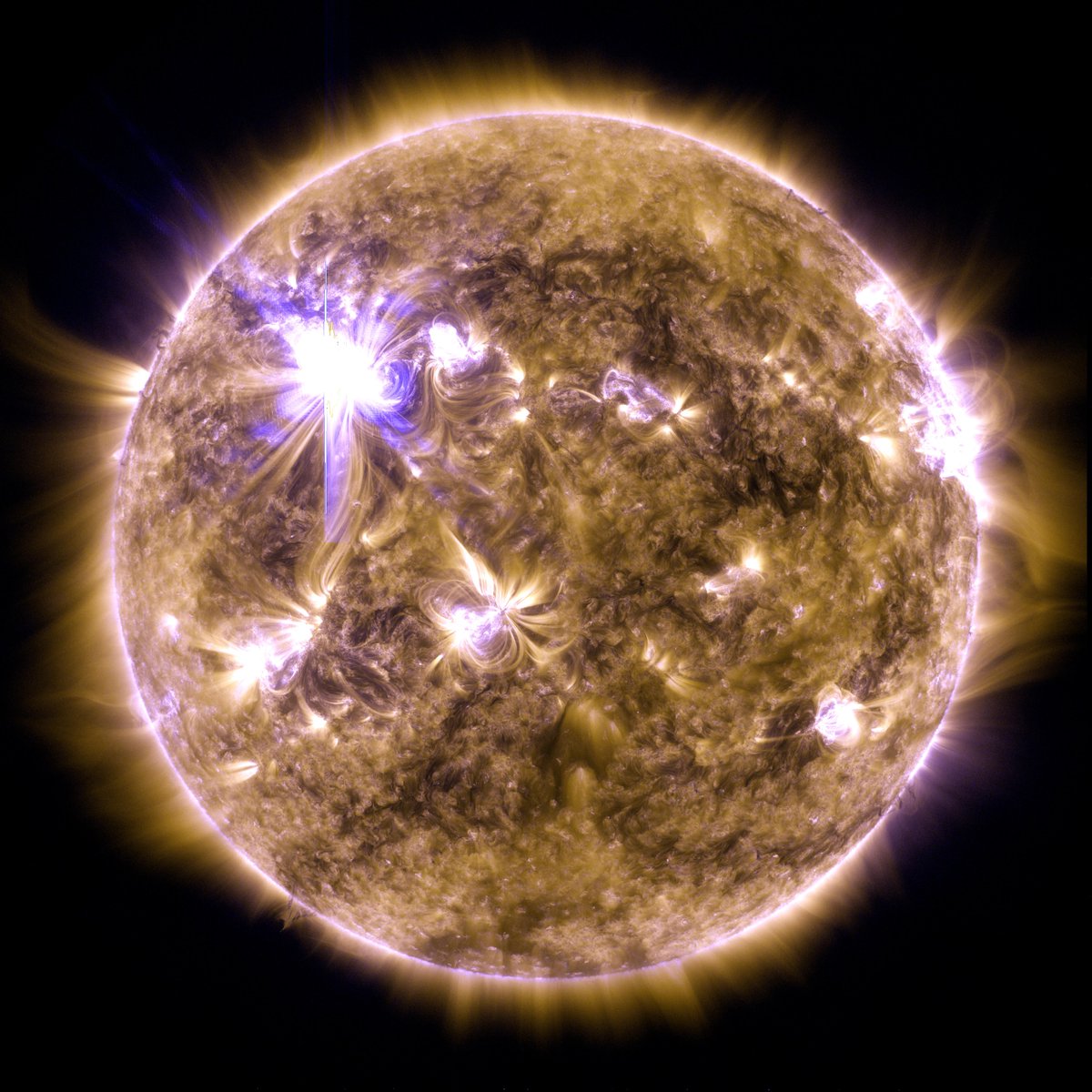
Young Sun-like stars are prone to throwing tantrums. Our young Sun may have unleashed frequent superflares. These likely triggered chemical reactions that produced heat-trapping gasses & helped keep Earth warm, despite a much dimmer Sun. ☀️🌎 https://t.co/1CnaVdRjDV https://t.co/
The Sun as seen by the SDO spacecraft in March 2012. It is a bright, pale yellow globe. Pinkish flares that glow so bright they become white burst from several places on the surface, with the largest just in from 10 o'clock. Another bright spot glows from 2 to 3 o'clock.
28.1K views · 687 likes · 121 reposts · 18 replies Open on X →
Stars are still being born today. ✨ In starburst galaxies like Messier 82, stellar birth is an explosive process, driving enormous galactic winds. By peering through dust clouds, @NASAWebb reveals the hidden chaos. https://t.co/HBg0agtF82 https://t.co/T0LiBmmoTk
3:29
21.3K views · 443 likes · 102 reposts · 13 replies Open on X →
A dying star left behind a cosmic roar 🦁 @NASAWebb’s images of nebula NGC 2392 reveal intricate shells of gas and dust shaped by a central white dwarf star. In about 10,000 years, it will disperse into space, but first, Webb caught the fleeting moment. https://t.co/VUGEBknR7A ht
Webb’s NIRCam and MIRI combined image of planetary nebula NGC 2392, the Lion Nebula, against the black background of space. The nebula is at center, circular in shape, and looks like a male lion’s head. In the center is a small, pinkish-white circle with eight-point diffraction spikes, a white dwarf star. Surrounding the star are purple-pink cavernous bubbles and shell-like rings. The bubbles and shells form an oval with two small, wide arcs near the top, reminiscent of a lion’s face and its ears. What appears to be extended outward from the lion’s face is a thick ring of purple-blue material. The width of the ring is consistent throughout and resembles a mane. The area closest to the lion’s face looks cloudy, while the edges of the mane look like there are clumps of dust with comet-like tails. In the background are distant galaxies and stars. Some galaxies are yellow and orange points of light and others have spiral structures. Some stars have diffraction spikes.
43.9K views · 1.7K likes · 319 reposts · 40 replies Open on X →
Star Formation Winding Down 🌌 The Andromeda galaxy shines with stars, but star formation has been declining for the past 500 million years. Using @nasahubble data, scientists measured about 200 million stars to learn about the galaxy’s past activity. https://t.co/61tztN2J8s htt
The left half of the disk of the Andromeda galaxy, with a jagged outer edge at the top and bottom on a black background. At right, the galaxy’s center is a horizontal yellow oval extending across about a third of the image. Two crescent shaped clumpy, dark dust lanes with abundant stars throughout extend out from the center. The galaxy becomes bluer as you move outward. At top middle, the satellite galaxy M32 appears as a small, fuzzy yellow oval. Within the disk of Andromeda, two regions at upper right and lower middle are outlined in small white boxes labeled 1 and 2, respectively. At the left side of the image, those two regions are enlarged in pullouts. Both contain a dense, grainy-appearing field of thousands of stars. Region 1 is noticeably bluer than region 2 and contains blue star-forming clumps.
24.1K views · 433 likes · 74 reposts · 11 replies Open on X →
Cacti in Space🌵 A lower-redshift spiral galaxy nicknamed the “Saguaro” appears to have one of those Little Red Dots seen by @nasawebb and @nasahubble at its center. It will help scientists learn about the pathways these dots take through cosmic time. https://t.co/5Nm8lojd03 htt
A rectangular image with thousands of galaxies of various shapes and colors on the black background of space. Some are noticeably spirals, either face-on or edge-on, while others are blobby ellipticals. Many are too small to discern any structure. One prominent foreground star at top center features Webb’s signature 8-point diffraction spikes. At upper right, a box shows a zoomed in portion of the image. The pullout features a spiral galaxy labeled “WISEA J123635.56+621424.2.” The galaxy has a bright yellow center and faint brown arms speckled with regions of blue that appear to wind clockwise around the galaxy’s core.
26.3K views · 260 likes · 39 reposts · 8 replies Open on X →
We're all celebrating a successful launch! @NASAAdmin Jared Isaacman visited Goddard yesterday to commend the workforce on the launch of @NASARoman, ahead of schedule & on budget. The Roman operations team visited with the administrator about the mission's progress so far. http
Jared Isaacman and Jamie Dunn sit on a stage in front of a black curtain. They are both wearing suits and sitting on high chairs, with a table with bottles of water between them. Jared is talking into a mic and gesturing with his other hand, while Jamie listens. In the foreground, the backs of audience members' heads are out of focus.
Jared Isaacman stands in the Roman space telescope Mission Operations Center. He is surrounded by rows of people sitting at large computer monitors, which we see the backs of. They are looking up at him and listening. The back wall is black and says Roman Space Telescope Mission Operations with blueprints of the space telescope.
Jared Isaacman listens to an employee during an informal meet and greet. They are standing facing each other and smiling. Tom Neumann stands next to Jared, also smiling. They are in a well-lit auditorium.
25K views · 292 likes · 40 reposts · 8 replies Open on X →
Topsy-Turvy Spiral 🌀 @nasahubble captured an image of galaxy NGC 4654, which is asymmetric. One edge is defined while the opposite has a long tail of gas stretching out. The galaxy’s asymmetry is due to its high velocity as it travels through space! https://t.co/NnFymOm9o1 http 12.2K views · 356 likes · 74 reposts · 7 replies Open on X →
As @NASARoman begins its journey, Near Space Network engineers are on console at Goddard supporting the mission through its critical early orbit phases. The network is providing communications and tracking as Roman heads to space. https://t.co/z9jdq82jZb 9.6K views · 155 likes · 34 reposts · 7 replies Open on X →
Keeping your hands busy with a craft while you watch? You’ve got something in common with @NASARoman’s namesake! 🧶 The Nancy Grace Roman Space Telescope is named for NASA's first chief astronomer, also known as the "mother of Hubble." Let's unravel a bit of her story: 14K views · 129 likes · 25 reposts · 6 replies Open on X →
@NASAGoddard Is the redness from all the SRM “glitter” in the atmosphere? 48 views · 2 likes · 1 reposts · 0 replies Open on X →
If you're in the eastern Pacific, North & South America, Europe or Africa, catch Earth's shadow crossing the Moon starting at about 10:34 p.m. ET, Aug. 27. It will reach maximum eclipse — about 93% coverage — just after midnight at 12:12 a.m. ET, Aug. 28. https://t.co/B8uaTAGova 2.6K views · 26 likes · 13 reposts · 0 replies Open on X →
The Moon's blushing from all the attention! 😊 After taking center stage during the total solar eclipse on Aug. 12, the Moon will turn red tonight in a partial lunar eclipse. https://t.co/o3kKZLcUhG 29K views · 856 likes · 190 reposts · 15 replies Open on X →
@NASAGoddard @NASAArtemis @Astro_Christina I wish you had room for one more. 598 views · 2 likes · 0 reposts · 0 replies Open on X →
The crew met some of the youngest members of the Artemis Generation, pre-kindergartners from the NASA Goddard Child Development Center, as part of their visit. https://t.co/vsHwjJFEjU 112.5K views · 593 likes · 68 reposts · 12 replies Open on X →

Against accounts of the same size

22 posts from the last 90 days, next to the 100K–1M follower range. shown far beyond its own audience, and the audience reacts.

Median views20 304this account5 983median for 100K–1M
Reach, %2.18%this account1.49%median for 100K–1M
Engagement, %2.42%this account0.93%median for 100K–1M
MetricThis accountMedian for 100K–1MRatio
Median views per post20 3045 9833.39×
Reach (views ÷ followers)2.18%1.49%1.46×
Engagement rate2.42%0.93%2.60×

Others in this range →   Compare with another account →   How these benchmarks are built →

Growth & engagement

How the posts we collected actually performed: views and reaction rate post by post, what the audience did with them, and where the follower count goes.

Views per post

24.1K4 Sep
43.9K7 Sep
21.3K8 Sep
28.1K10 Sep
30.7K
20.8K14 Sep
53.3K15 Sep
21K16 Sep
15.4K
7.6K17 Sep
19.8K18 Sep
17.1K21 Sep
11.2K22 Sep
12.1K23 Sep

Last 14 collected posts, oldest on the left. The scale is logarithmic: one post can outrun the rest a hundred times over.

Engagement rate per post

2.17%4 Sep
4.83%7 Sep
2.63%8 Sep
2.96%10 Sep
1.79%
2.26%14 Sep
2.16%15 Sep
4.96%16 Sep
3.11%
2.13%17 Sep
0.86%18 Sep
3.97%21 Sep
2.58%22 Sep
3.92%23 Sep

Reactions — likes, reposts, replies and quotes — divided by views. Median for 100K–1M accounts is 0.93%.

What the audience does

Likes77.8%10 526 in total
Reposts13.6%1 841 in total
Replies2.0%269 in total
Quotes0.8%102 in total
Bookmarks5.8%787 in total

Share of every reaction we collected for this account. Replies mean argument, reposts mean endorsement, bookmarks mean the post was worth keeping.

Followers by day

20 Sep24 Sep

Daily snapshots since 20 Sep 2026; the dashed line is the starting count.

Similar accounts