tweetindex
EN

NASA Marshall ✓

@NASA_Marshall · Huntsville, Alabama, USA · joined 01 Apr 2009

#NASAMarshall delivers NASA's most vital propulsion systems, launch vehicles, cutting-edge science, and more. Verification: https://t.co/f1Rtti0Zm6

835 951Followers
87Following
20 854Posts total
873.5KViews on collected posts

Latest posts

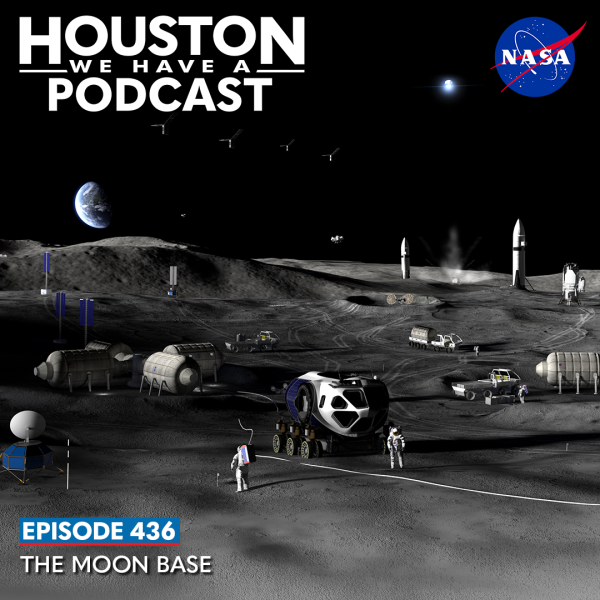
"I feel like it’s almost an obligation for humanity to continue exploring space," said NASA’s Moon Base program manager Carlos García-Galán in this episode of #HWHAP. Listen now to learn how @NASA is establishing a long-term human presence on the Moon >> https://t.co/yoY7tG9GdL
8K views · 202 likes · 37 reposts · 6 replies Open on X →
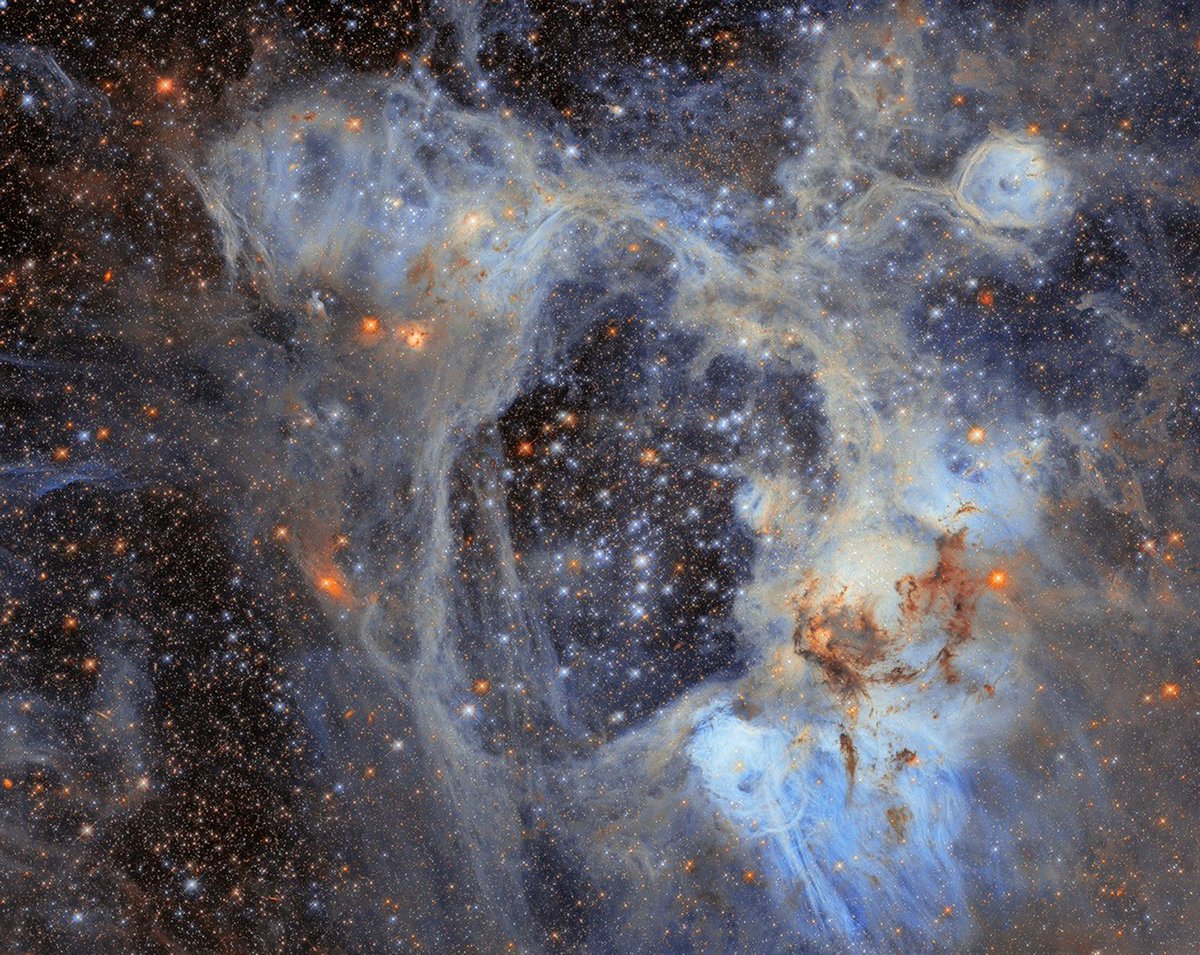
We l0ve new @NASAHubble ph0t0s 👀 This image features a sprawling view of the nebula N44 in the Large Magellanic Cloud. At the center is a ‘superbubble’ spanning roughly 210 by 140 light-years across. Learn more about this cosmic zero here >> https://t.co/d2wHRtj1ek https://t.co
This Hubble Space Telescope image features the picturesque nebula LHA 120-N44, or N44.
NASA, ESA/Hubble, D. Gouliermis
31.9K views · 1.1K likes · 188 reposts · 32 replies Open on X →
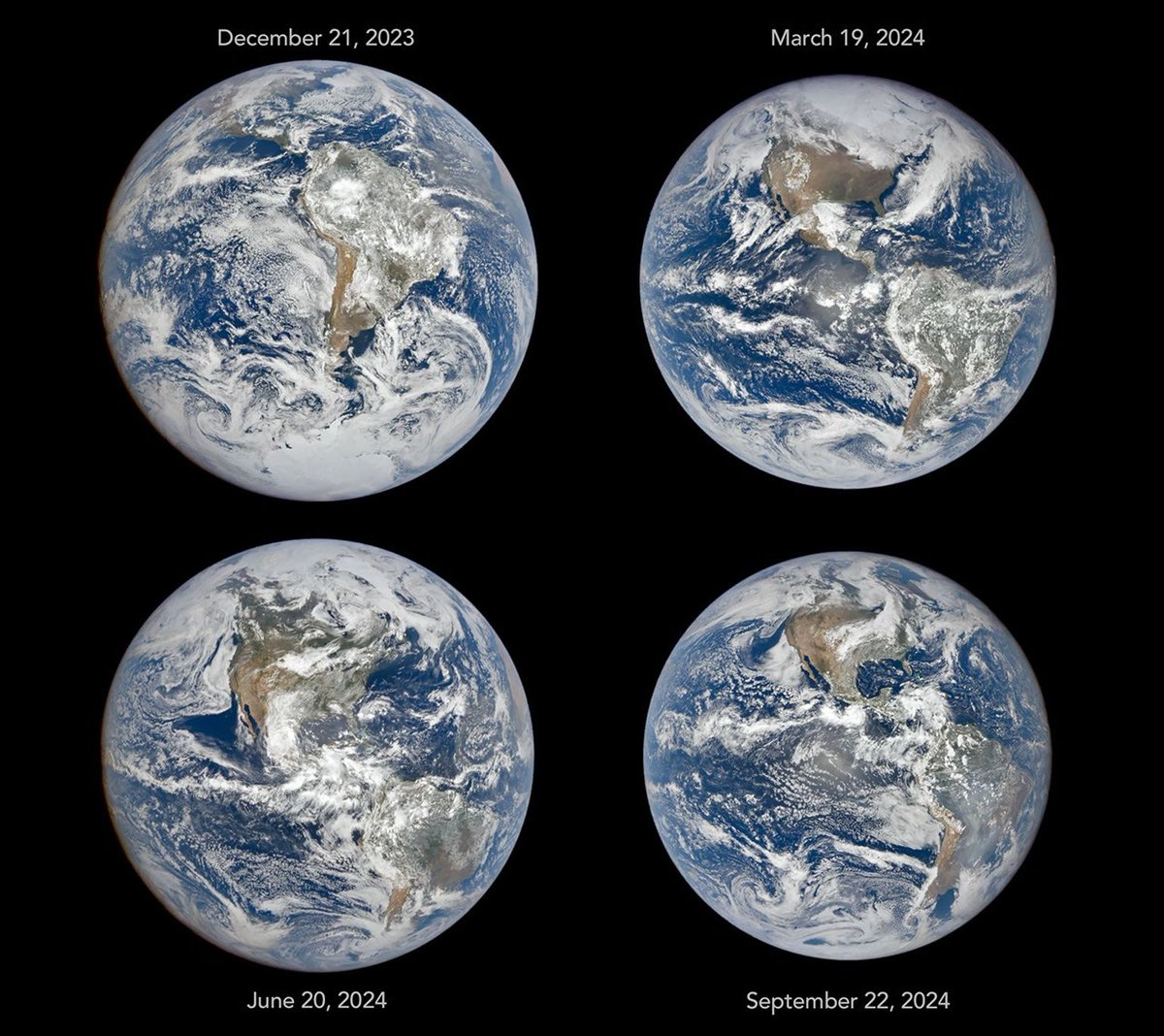
Depending on your locale, equinoxes can be seen as bearers of longer nights and gloomy weather, or promising beacons of milder temperatures and more sunlight. Today, we mark the autumnal equinox - the official start of fall in the Northern Hemisphere. 🔗 https://t.co/kFEDMMdVjV
Images from NASA's EPIC (Earth Polychromatic Imaging Camera) aboard the NOAA mission DSCOVR (Deep Space Climate Observatory) show Earth on the December and June solstices and the March and September equinoxes, illustrating how the tilt of Earth’s axis shifts the continent’s apparent positions through the year.
NASA Earth Observatory/Michala Garrison
30.9K views · 565 likes · 101 reposts · 18 replies Open on X →
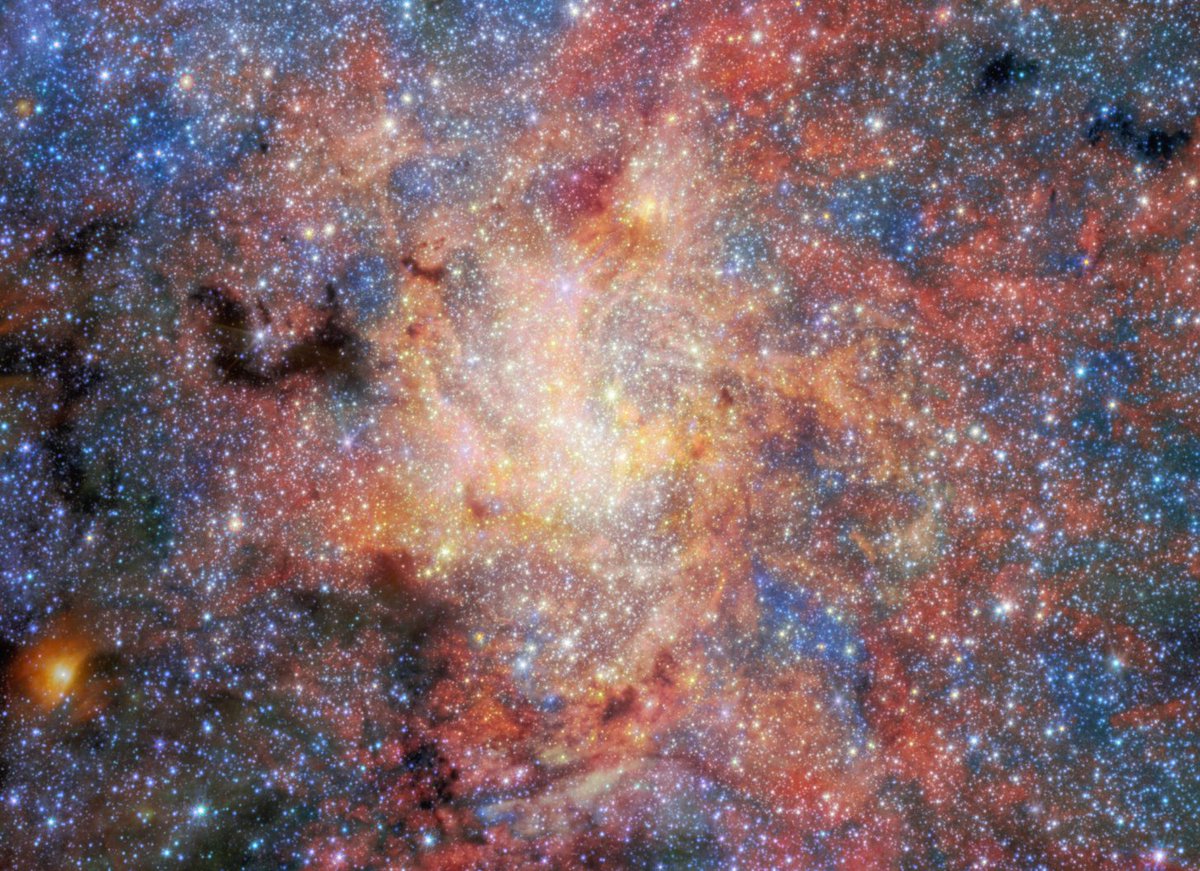
A brilliant concentration of stars takes center stage in this image taken by @NASAWebb. These new observations showed that dust and water can form and survive surprisingly close to the supermassive black hole at the center of our Milky Way galaxy. 🔗 https://t.co/w1DFuNHQf3 htt
A bright, densely populated star cluster lies near the center of the image, surrounded by intricate clouds of glowing gas and dust in shades of red, pink, orange, and blue. Dark lanes of dust weave through the nebula, contrasting with the luminous central region. Countless stars are scattered across the field, with a few brighter foreground stars showing Webb's characteristic diffraction spikes. Image Credit: ESA/Webb, NASA & CSA, F. Peißker, J. Lu, F. Yusef-Zadeh, N. B. Sabha, C. Chan
26.4K views · 1.2K likes · 200 reposts · 29 replies Open on X →
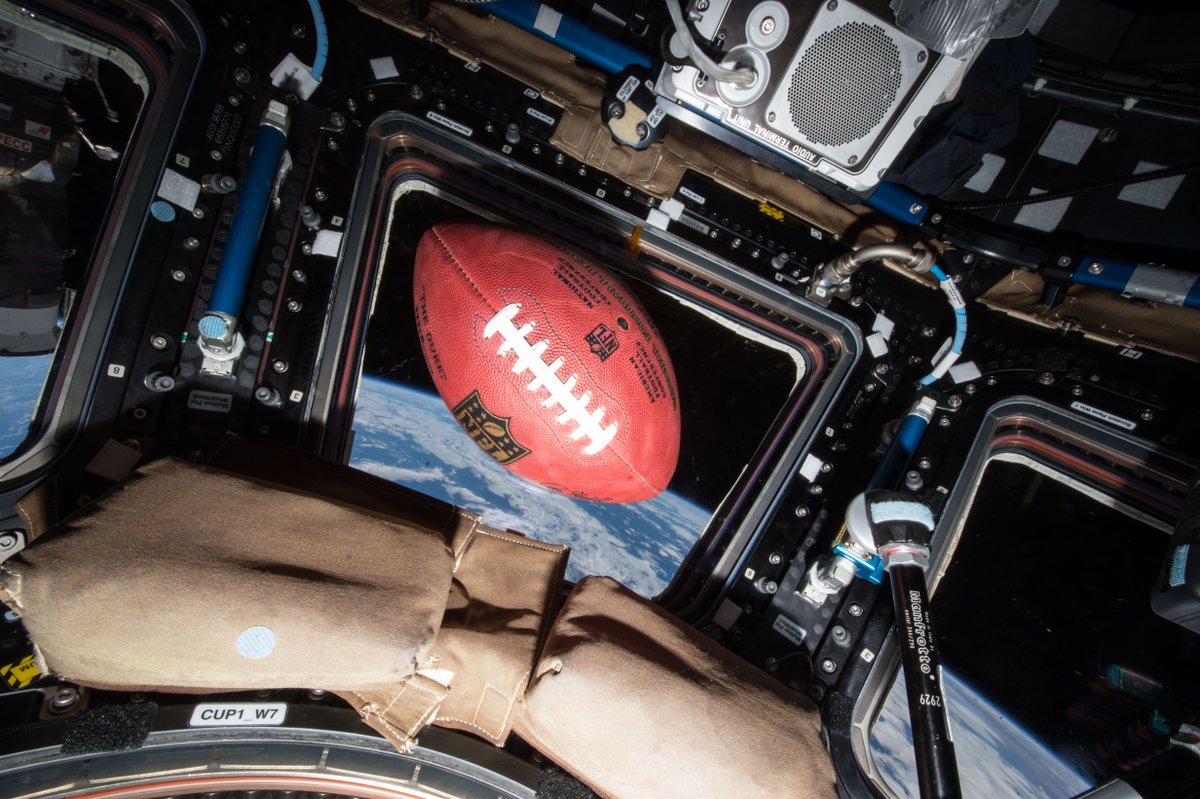
Through a new collaboration between NASA and the National Football League (NFL), the agency is conducting flyovers, astronaut appearances, and fan engagements at games across the U.S. Today, catch NASA in Baltimore at the Ravens vs. Saints game. Check out the rest of the https
A football floats in microgravity aboard the International Space Station, high above the Earth.
Credit: NASA
17.1K views · 364 likes · 64 reposts · 22 replies Open on X →
Tonight, we will celebrate the Moon, the science behind it, and its connection to space exploration and human culture for International Observe the Moon Night! Join NASA Marshall for a free, public event from 5:30 to 8 p.m. CST at the @RocketCenterUSA. https://t.co/BXKu8QITle
This image was captured at the U.S. Space and Rocket Center in Huntsville, Alabama, near NASA's Marshall Space Flight Center. The Moon, in the midst of a lunar eclipse, is seen in the top right of the sky. Underneath it is the Davidson Center and to the left is a Saturn V rocket illuminated by white lights. Credit: NASA/Joe Kuner
21.2K views · 717 likes · 106 reposts · 23 replies Open on X →
We were honored to welcome NASA Administrator Jared Isaacman today to Marshall, where he met with our team members, answered workforce questions, and met with center leadership. His visit highlighted our progress and accomplishments and the work ahead as we return to the Moon and
22.8K views · 544 likes · 47 reposts · 13 replies Open on X →
The landing location has officially been named for NASA's Dragonfly mission! The global body responsible for designating objects in space has approved a name for the large dune field on Saturn's moon Titan: Ahmakiq Undae. Here's the story behind it: https://t.co/fnKD6NnvMp http
Highlighted in purple, located in the equatorial dune fields of Saturn’s moon Titan, Ahmakiq Undae has a diameter of approximately 500 miles (810 kilometers) and borders the roughly 50-mile (80-kilometer) diameter Selk impact crater, to the upper right. Deposits formed during the impact that created Selk Crater are primary exploration targets for NASA’s Dragonfly mission. The yellow box on the global image of Titan denotes the approximate area.
NASA/Jason Barnes
55.4K views · 2.1K likes · 353 reposts · 39 replies Open on X →
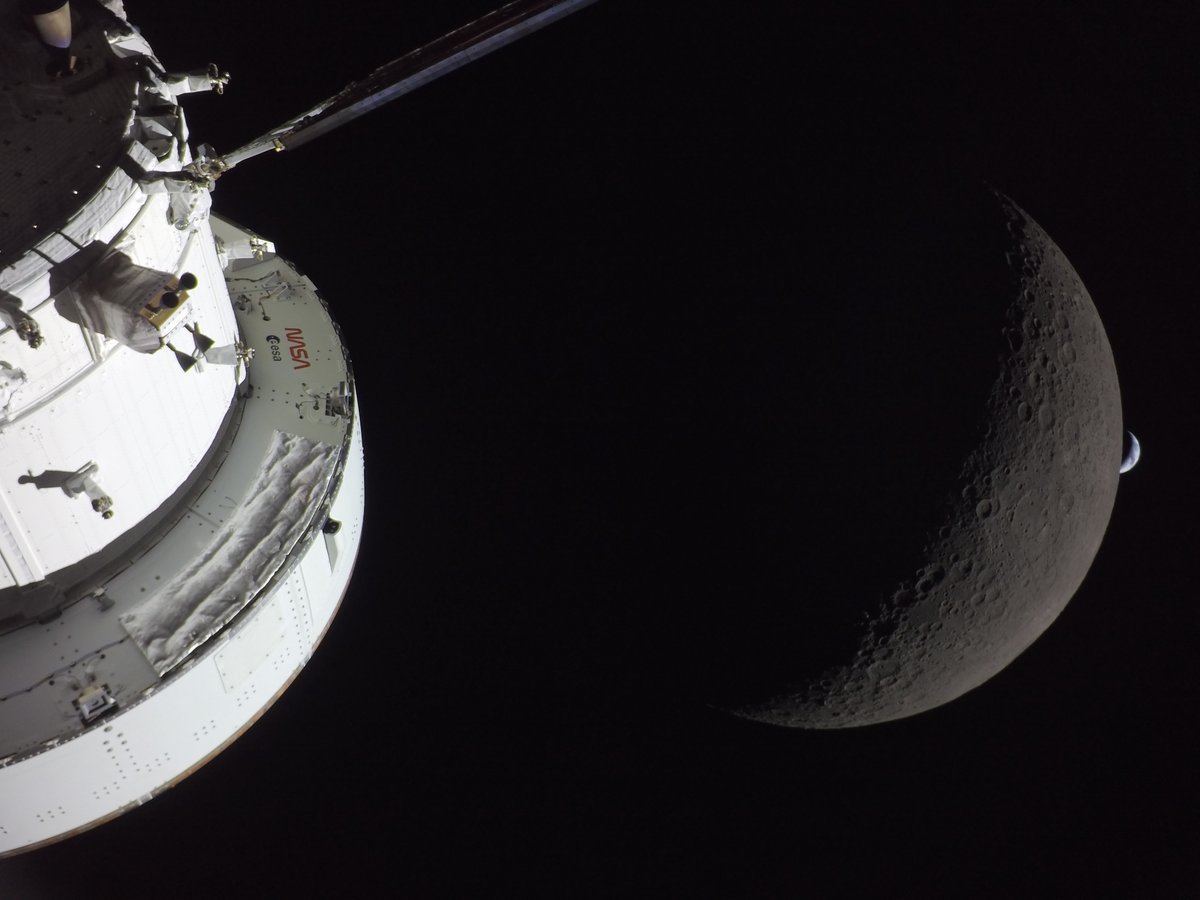
71 nations have signed the Artemis Accords, committing to safe, transparent space exploration, and the timely release of scientific data. Read more about NASA's commitment to open science as we prepare to explore the Moon through @NASAArtemis: https://t.co/rtpD5Ou6xq https://t.
NASA’s Orion spacecraft captures the Moon and the Earth in one frame during the Artemis II crew’s deep space journey at 6:42 p.m. ET on the sixth day of the mission. The right side of NASA’s Orion spacecraft is seen lit up by the Sun. A waxing crescent Moon is visible behind it. And then, a crescent Earth, tiny compared to the Moon, is about to set below the Moon’s horizon on the right. Credit: NASA
13.8K views · 476 likes · 78 reposts · 15 replies Open on X →
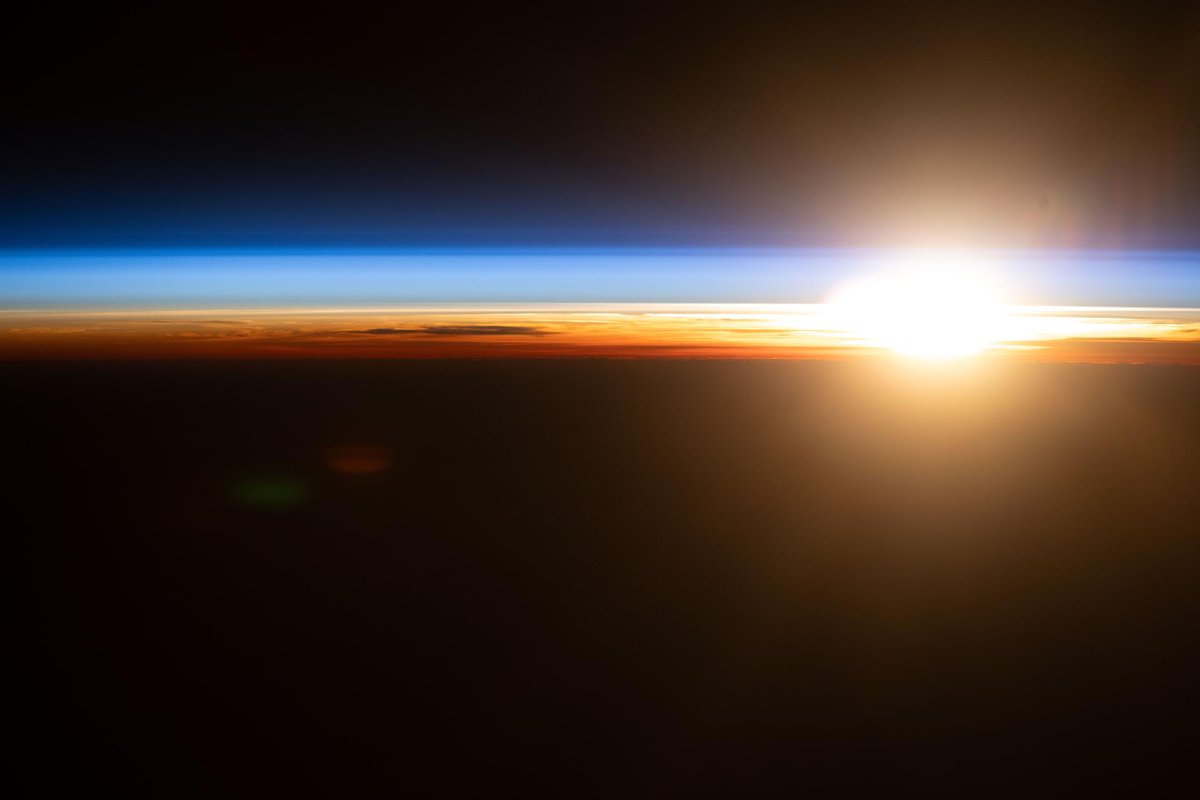
New supplies are on their way to the @Space_Station after launching aboard a Progress 96 cargo spacecraft on Wednesday, Sept. 16. In the meantime, the seven residents aboard the orbiting outpost stayed focused on ongoing research. Learn more: https://t.co/400yhfqI09 https://t.
An orbital sunrise above the Pacific Ocean illuminates Earth’s atmosphere, revealing cloud tops and orange and blue hues outlining the planet’s horizon.
NASA/Jessica Meir
10.9K views · 325 likes · 55 reposts · 9 replies Open on X →
Observations from @NASAHubble recently revealed a giant, evolving, 10-sided atmospheric wave encircling Saturn's south pole. This discovery marks the first time a large, regular-sided jet pattern has been observed in the planet's southern hemisphere. 🔗 https://t.co/8UXdSXu4rf ht
Two views of Saturn from NASA’s Hubble Space Telescope reveal a giant, evolving 10-sided atmospheric wave encircling the planet’s south pole. The feature, called a decagon, is the first large, persistent, regular-sided pattern observed at Saturn’s southern hemisphere.

By comparing observations taken over several years, researchers found that the pattern has become increasingly distinct since 2023, suggesting they may be witnessing a new atmospheric phenomenon develop on the gas giant. The observations, captured by Hubble's Wide Field Camera 3, were made as part of Hubble’s Outer Planet Atmosphere’s Legacy (OPAL) program, which has monitored the Jupiter, Saturn, Uranus, and Neptune for more than a decade.

The “X” and dashed circle in the image on the right represent where data was not captured by Hubble.

Image: NASA, ESA, STScI, Agustin Sánchez-Lavega (UPV), Amy Simon (NASA-GSFC), Michael Wong (UC Berkeley); Image Processing: Alyssa Pagan
18.4K views · 587 likes · 91 reposts · 15 replies Open on X →
🔭We've got some exciting updates from the @NASARoman team ⬇️ They have begun activating and testing several instruments on the telescope that will allow scientists to explore wide swaths of the cosmos in exquisite detail! Keep up with Roman at https://t.co/XnAfXtxm3A https://t.
GIF
26.7K views · 855 likes · 128 reposts · 18 replies Open on X →
We're excited to host an International Observe the Moon Night celebration from 5:30 to 8 p.m. CST on Saturday, Sept. 19, at the @RocketCenterUSA, the official visitor center for #NASAMarshall. Media can find more info here: https://t.co/1eqaN8O5tV https://t.co/MsOMtVFtVf
This graphic features the Rise mascot and a Moon. It reads, "Observe the Moon Night Saturday, Sept. 19 - 5:30-8 p.m., US Space and Rocket Center. Free Event, Telescopes - live dj - science shows - photo booth - STEM activities - face painting & much more." Credit: NASA/ Daniel Horton
7.3K views · 81 likes · 17 reposts · 3 replies Open on X →
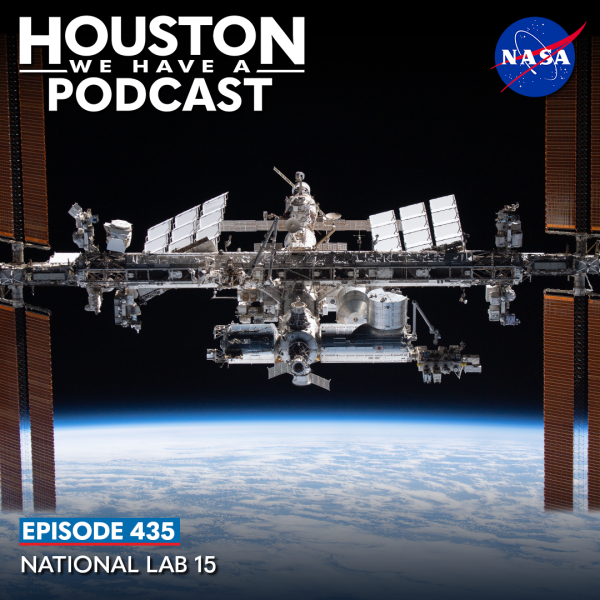
The ISS National Laboratory enables space research for commercial, academic, and government users. Our team at Marshall supports these experiments on board. Learn more about the ISS National Lab as they celebrate 15 years: https://t.co/nTi6gKO5Si https://t.co/ULrVyeGyxL
This image shows the ISS above Earth. The text reads, "Houston We Have a Podcast. Episode 435: National Lab 15". Credit: NASA
6.4K views · 120 likes · 18 reposts · 2 replies Open on X →
The former Lake Bonneville offers more than a glimpse into our planet’s past, it's also preparing us to explore another world. In June, it served as a setting for a field test of a camera system that will one day fly aboard NASA’s DAVINCI mission to Venus. 🔗 https://t.co/ffZwT1
GIF
21.7K views · 445 likes · 56 reposts · 7 replies Open on X →
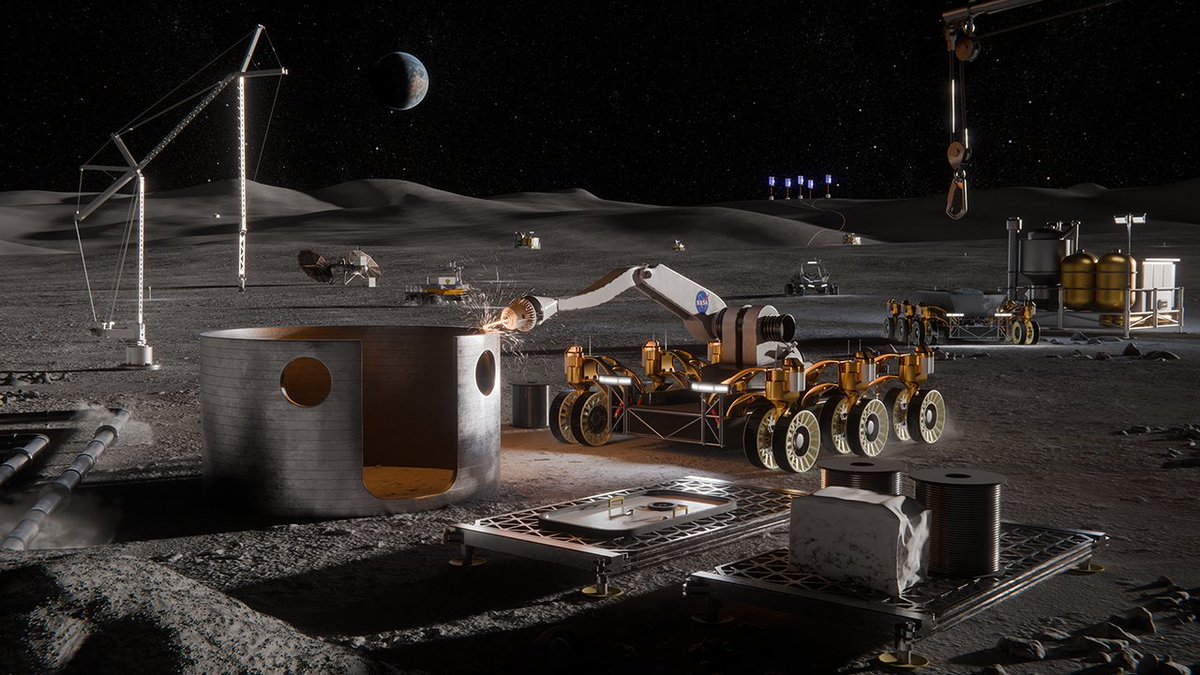
NASA is seeking proposals to advance the technology and infrastructure needed to explore the Moon and establish a Moon Base in the lunar South Pole region. To learn more, visit: https://t.co/LQMWJytfJe https://t.co/oVZdLb0msw
Artistic concept of lunar surface technologies and infrastructure capabilities, including in-situ resource utilization oxygen production systems, surface power systems, in-space manufacturing tools, and advanced nanomaterials production.
Credit: NASA
28.7K views · 923 likes · 163 reposts · 45 replies Open on X →
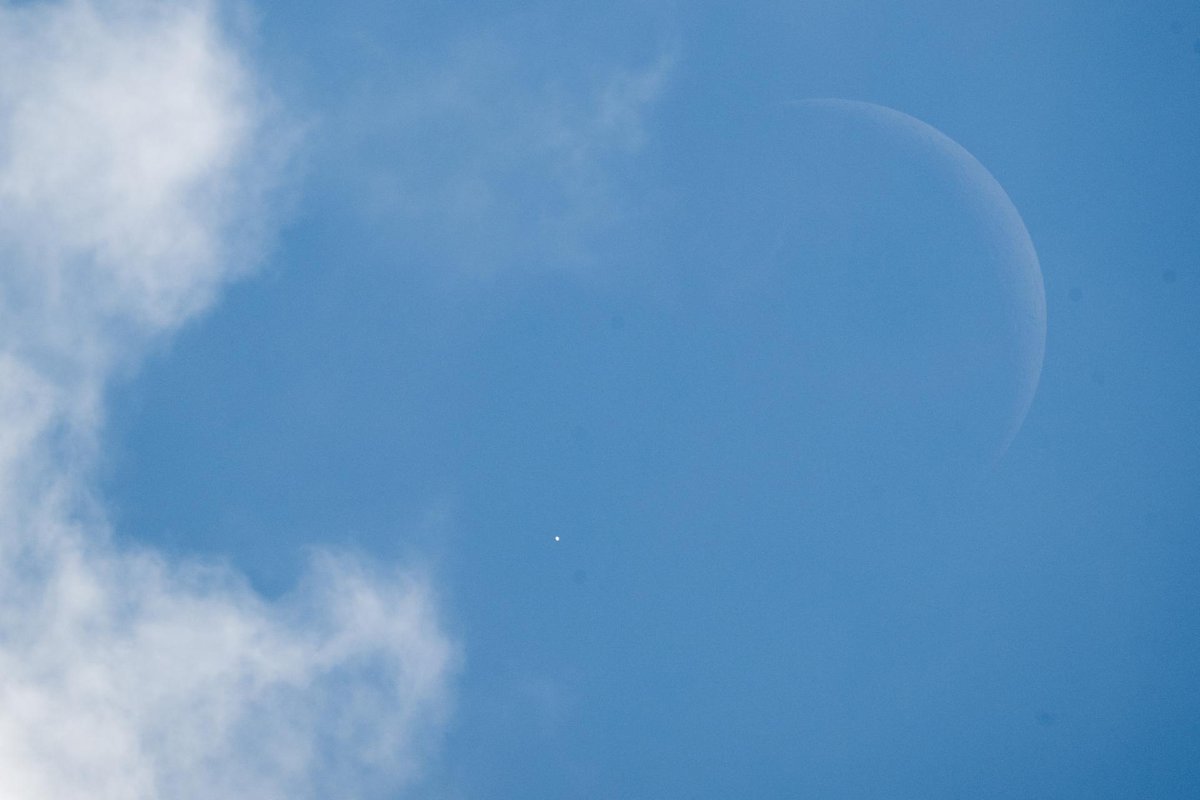
On June 17, skywatchers enjoyed a rare event: a daytime lunar occultation of Venus. If you missed it, there will be another opportunity to see Venus disappear behind the Moon tomorrow, Sept. 14, for parts of Asia, Africa, Europe, and western Russia. 🔗 https://t.co/XGNlsyhngq ht
Venus is seen as it disappears behind the Moon at the start of the occultation on June 17, 2026, from the Mary W. Jackson NASA Headquarters building in Washington.
NASA/Joel Kowsky
20K views · 520 likes · 70 reposts · 29 replies Open on X →
🚀@NASARoman launched on Aug. 30. Here are some fun facts about this new addition to our @NASA telescope family: 1. The mission is named after NASA’s first chief astronomer, Dr. Nancy Grace Roman. 2. The observatory will journey a million miles to join Webb at Lagrange point 2. h
Image description: A SpaceX Falcon Heavy rocket lifts off from Launch Complex 39A at NASA’s Kennedy Space Center, sending a bright plume of flame and exhaust into a clear morning sky. Thick clouds billow across the sky as the rocket carrying NASA’s Nancy Grace Roman Space Telescope climbs upward during its 7:26 a.m. EDT launch on Aug. 30, 2026.
Photo Credit: NASA/Joel Kowsky
27.2K views · 854 likes · 150 reposts · 29 replies Open on X →
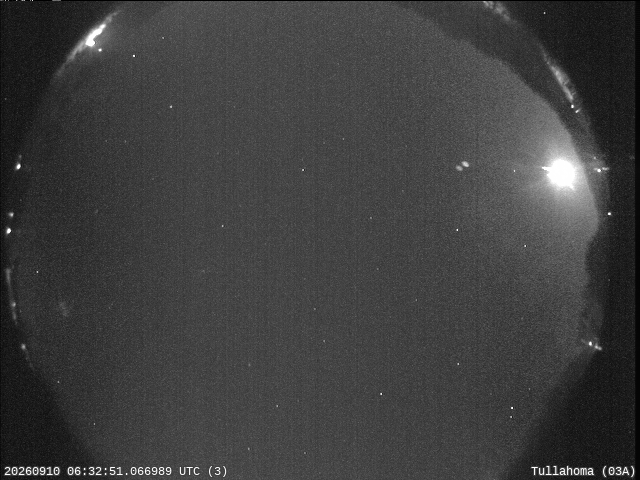
Early this morning, one of our NASA meteor cameras captured this bright fireball that occurred over western Kentucky. This meteor was a member of the little-known September epsilon Perseids meteor shower, which is noted for being rich in bright meteors. Upon entering the https:
15.6K views · 461 likes · 51 reposts · 10 replies Open on X →
Using NASA’s @chandraxray, scientists have discovered a new class of objects behaving unlike any they have seen before. The researchers found a total of 84 of these “hypersoft X-ray sources” in the six different galaxies they searched. READ MORE >> https://t.co/rj3pkTILqO http
M101 with illustrated circles calling out seven of the newly-discovered objects.
X-ray: NASA/CXC/Univ. of Alabama/M. Muhibullah et al.; Optical: NASA/ESA/STScI; Image Processing: NASA/CXC/SAO/N. Wolk
22.8K views · 1K likes · 184 reposts · 29 replies Open on X →
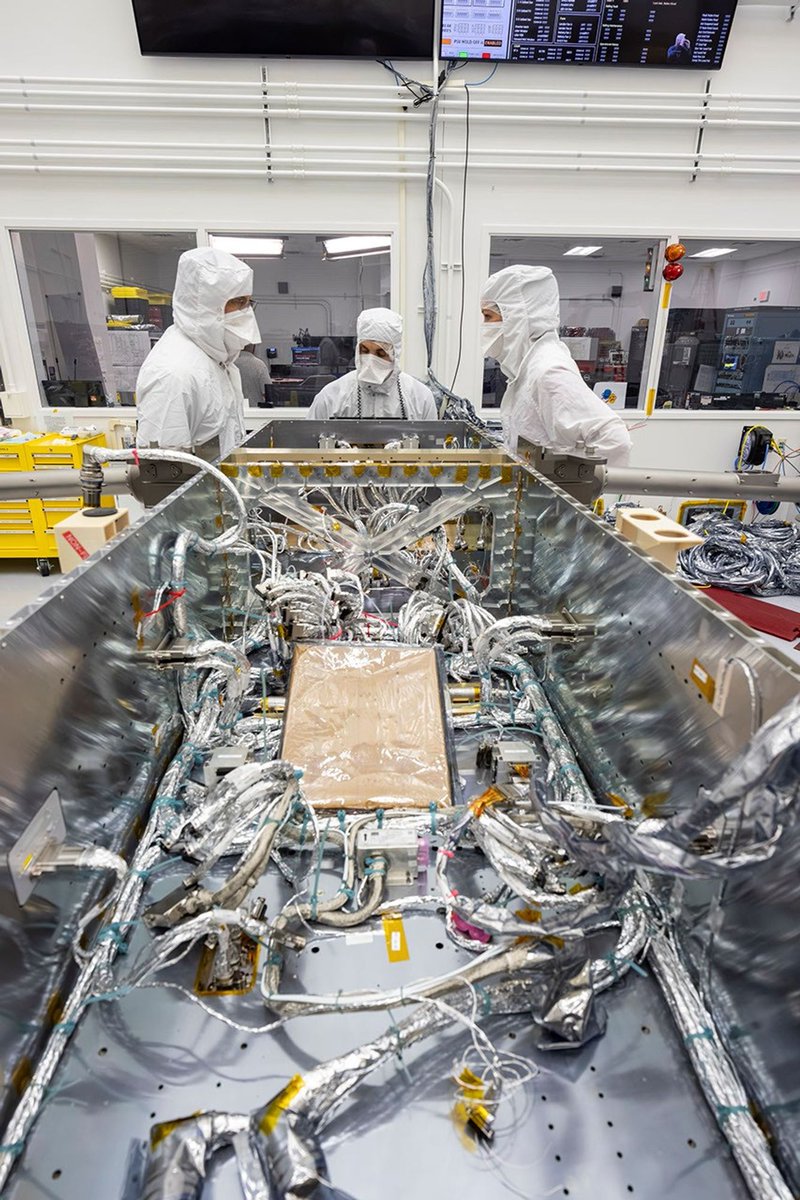
NASA’s Dragonfly is getting wired up! These bundles of cables and connectors make up the spacecraft’s electrical harness. Read about the team's progress connecting the harness to science instruments ahead of Dragonfly's scheduled launch in 2028 >> https://t.co/vUbhrUNaC1 https
The flight-ready Dragonfly electrical harness includes an estimated 17,315 feet of conductor wire and 374 connectors, and weighs about 100 pounds.
NASA/Johns Hopkins APL/Ed Whitman
37.5K views · 1.1K likes · 187 reposts · 24 replies Open on X →
A student at the Rochester Institute of Technology generated this time-lapse video of a set of @chandraxray exposures of the galaxy Centaurus A. This composite reminds us that astronomical data isn't static — it’s a living record of time, energy, and light. 🔗 https://t.co/Enk8V
1:40
28.1K views · 859 likes · 125 reposts · 21 replies Open on X →
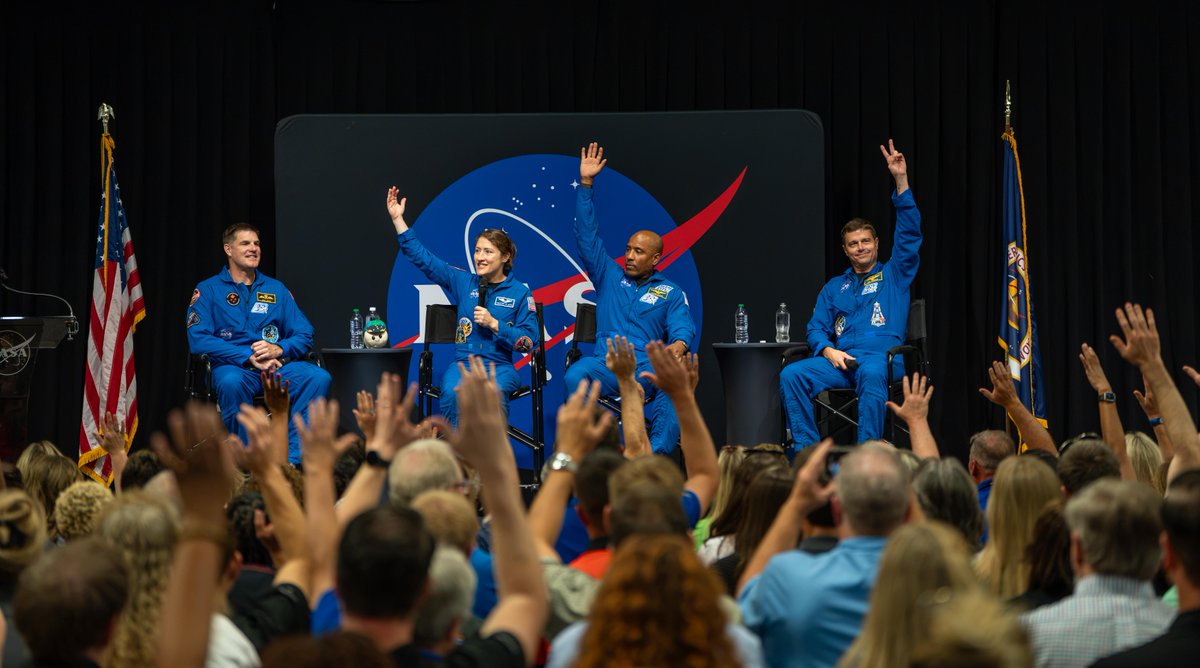
During their visit, the Artemis II crew asked our employees to raise their hand if they worked on the mission in any way... the crowd was a sea full of hands. On this #LaborDay, we thank our team for their incredible dedication. We wish you a safe and relaxing holiday! https://t
The crew of NASA’s Artemis II mission – NASA astronauts Reid Wiseman, Victor Glover, and Christina Koch, and CSA (Canadian Space Agency) astronaut Jeremy Hansen – visited Huntsville, Alabama, Tuesday, Aug. 1, where they met with the NASA workforce at NASA’s Marshall Space Flight Center. In this image, the crew sit on stage with their hands raised facing a crowd of NASA Marshall eployees who also have their hands raised. Credit: NASA/Brandon Hancock
18.8K views · 715 likes · 107 reposts · 22 replies Open on X →
National Read a Book Day: Space Stories Edition! Hooray for SLS! The rocket sent the Artemis II crew on an exciting, historic mission. Our Friend Orion kept them safe while they explored farther than ever before. And thanks to our important partners, they were able to go There h
0:22
14.4K views · 208 likes · 35 reposts · 10 replies Open on X →
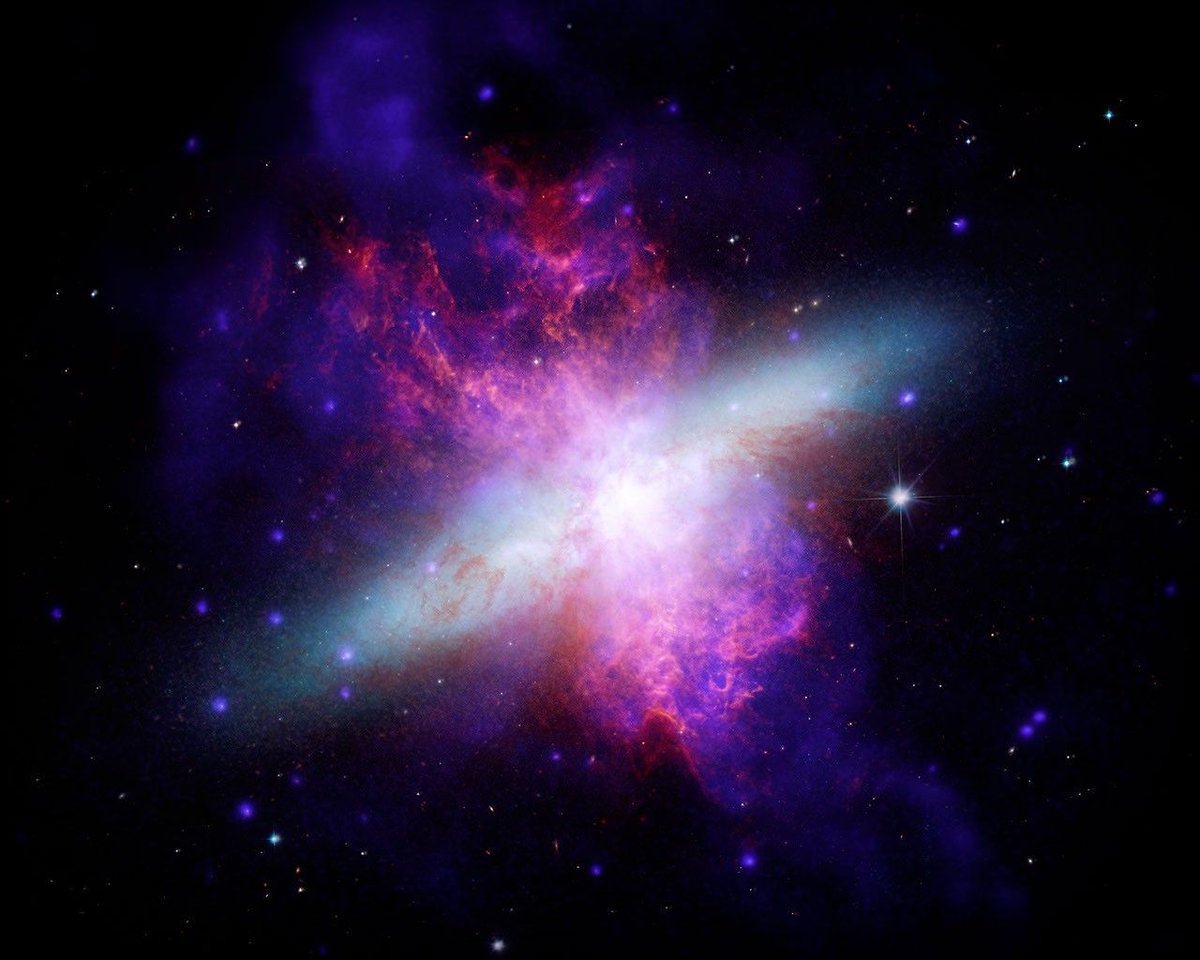
M82 is an irregular galaxy undergoing intense star formation due to a gravitational interaction with another galaxy. Nicknamed the Cigar Galaxy, it shows how violent galactic "exhaust systems" can regulate a galaxy's growth. See more @chandraxray images: https://t.co/Ff3RKPCceo
An irregular galaxy undergoing intense star formation because of a gravitational interaction with a neighboring galaxy hundreds of millions of years ago. Chandra X-rays (blue), supplemented by NuSTAR data, show towering superwinds of million-degree gas blowing thousands of light-years out of the galactic disk, with Hubble optical light (yellow, orange and white) showing the galaxy shape, and Webb and Spitzer detailing infrared dust emission (red). M82 was nicknamed the Cigar Galaxy mostly because of its edge-on angle to Earth, which makes its central disk look like an elongated, cigar-shaped oval with small optical telescopes. The galaxy illustrates how violent galactic "exhaust systems" can regulate a galaxy's growth by venting gas outwards. Image Credit: X-ray: NASA/CXC/SAO; Optical: NASA/ESA/STScI; Infrared: NASA/ESA/CSA/STScI; Image Processing: NASA/CXC/SAO/L. Frattare, J. Major, and K. Arcand
33.5K views · 1.3K likes · 250 reposts · 28 replies Open on X →
From Marshall to Michoud - the celebration continues! Yesterday, the Artemis II crew visited #NASAMichoud where so much of their journey began. They shared stories from their trip around the Moon and connected with the workforce that built the SLS rocket that launched them! 🚀 h
NASA Michoud employees pose for a large group photo with the Artemis II crew in the factory. Credit: NASA/Michael DeMocker
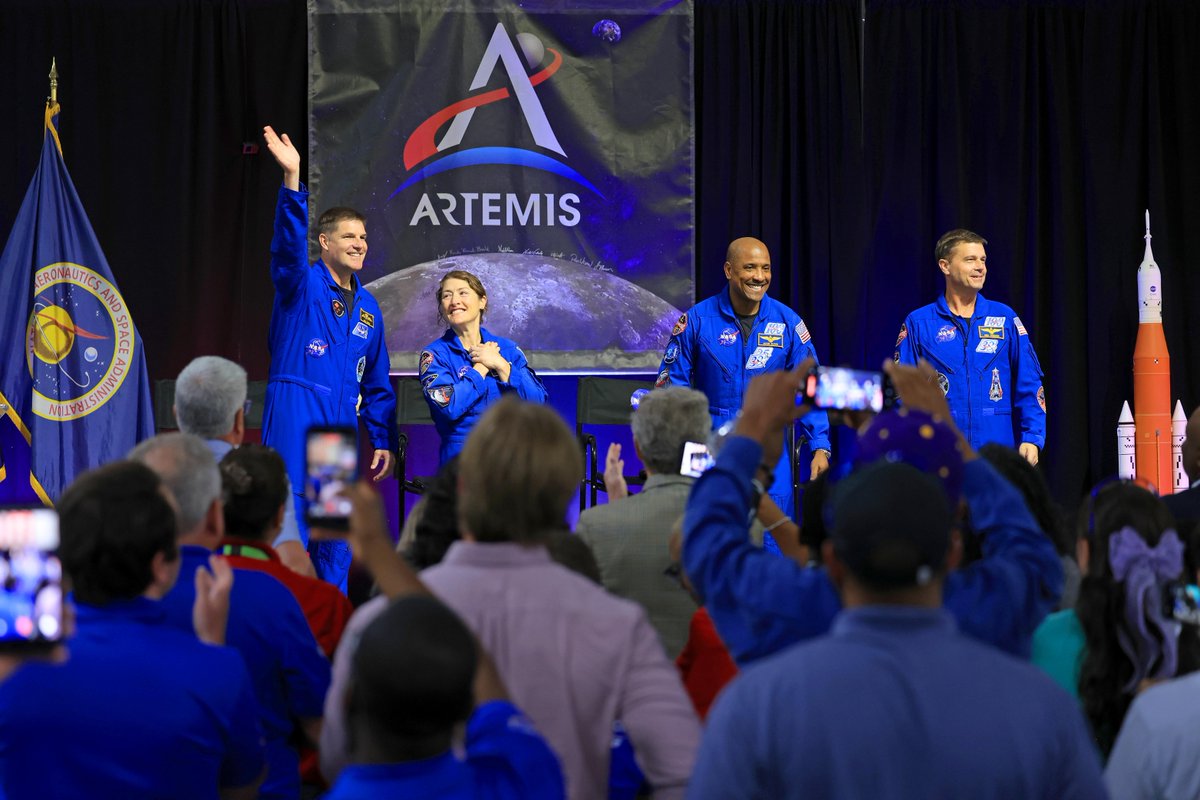
The Artemis II crew stand on a stage and wave to a crowd of employees at NASA Michoud during a visit. Credit: NASA/Michael DeMocker
NASA Astronaut Victor Glover takes a selfie with his phone during a crew visit at the NASA Michoud Assembley Facility. Credit: NASA/Michael DeMocker
25K views · 451 likes · 70 reposts · 9 replies Open on X →
Artemis III is a critical step in returning humans to the lunar surface - here are the latest updates ⬇️ 🔥All four engines installed 🏗️Booster stacking continues 🧑‍🚀Crew members are training 🖥️Launch simulations ongoing MORE >> https://t.co/CgSss0hcGJ https://t.co/AqW1rCSGjS 56.2K views · 1.2K likes · 182 reposts · 28 replies Open on X →
🏴‍☠️X marks the spot! @NASAWebb captured this infrared image of a feature in part of the Carina Nebula called the “Treasure Chest.” It is an object known as a cometary globule, or an isolated cloud of gas and dust with a dense, dark head and a sweeping tail. https://t.co/MMezGOY 32.4K views · 1.9K likes · 348 reposts · 36 replies Open on X →
Heather Koehler, NASA Technical Fellow for Flight Mechanics based at #NASAMarshall, explains how knowledge at NASA is passed from person to person, program to program in this new episode of Small Steps, Giant Leaps. Listen here >> https://t.co/SkdIRxvToy https://t.co/mzfRHqgYbS 9.4K views · 276 likes · 34 reposts · 6 replies Open on X →
The Artemis II crew visited the Rocket City this week to celebrate their mission with our community. Their visit included a public event at the @trashpandas stadium and an employee event at #NASAMarshall. Thanks for stopping by Reid, Victor, Christina, and Jeremy 🫶 https://t.co 36.5K views · 792 likes · 97 reposts · 8 replies Open on X →

Against accounts of the same size

36 posts from the last 90 days, next to the 100K–1M follower range. shown far beyond its own audience, and the audience reacts.

Median views22 798this account5 983median for 100K–1M
Reach, %2.73%this account1.49%median for 100K–1M
Engagement, %3.57%this account0.93%median for 100K–1M
MetricThis accountMedian for 100K–1MRatio
Median views per post22 7985 9833.81×
Reach (views ÷ followers)2.73%1.49%1.83×
Engagement rate3.57%0.93%3.84×

Others in this range →   Compare with another account →   How these benchmarks are built →

Growth & engagement

How the posts we collected actually performed: views and reaction rate post by post, what the audience did with them, and where the follower count goes.

Views per post

6.4K15 Sep
7.3K
26.7K16 Sep
18.4K
10.9K17 Sep
13.8K
55.4K18 Sep
22.8K
21.2K19 Sep
17.1K20 Sep
26.4K21 Sep
30.9K22 Sep
31.9K
8K23 Sep

Last 14 collected posts, oldest on the left. The scale is logarithmic: one post can outrun the rest a hundred times over.

Engagement rate per post

2.20%15 Sep
1.39%
3.76%16 Sep
3.80%
3.57%17 Sep
4.14%
4.47%18 Sep
2.65%
4.00%19 Sep
2.65%20 Sep
5.54%21 Sep
2.24%22 Sep
4.29%
3.09%23 Sep

Reactions — likes, reposts, replies and quotes — divided by views. Median for 100K–1M accounts is 0.93%.

What the audience does

Likes79.8%22 348 in total
Reposts12.8%3 592 in total
Replies2.1%585 in total
Quotes0.5%145 in total
Bookmarks4.8%1 352 in total

Share of every reaction we collected for this account. Replies mean argument, reposts mean endorsement, bookmarks mean the post was worth keeping.

The follower curve appears once this account has two daily snapshots — we take one a day, and this one is on its first.

Similar accounts