tweetindex
EN

Tony Breu

@tony_breu · Boston, MA · joined 05 Apr 2012

Hospitalist, VA Boston. Assistant Professor, @harvardmed and @HMSbioethics. Co-host, @CuriousClinPod. Usually at #AMreport. Views are my own.

107 872Followers
894Following
9 133Posts total
528.4KViews on collected posts

Latest posts

1/15 🤔Does end-stage renal disease (ESRD) make diabetes disappear? No, but in some patients with ESRD, insulin needs fall. A1c drops. Diabetes medications can be stopped. This has been called “burnt-out diabetes.” Let's examine why. 23.1K views · 251 likes · 91 reposts · 4 replies Open on X →
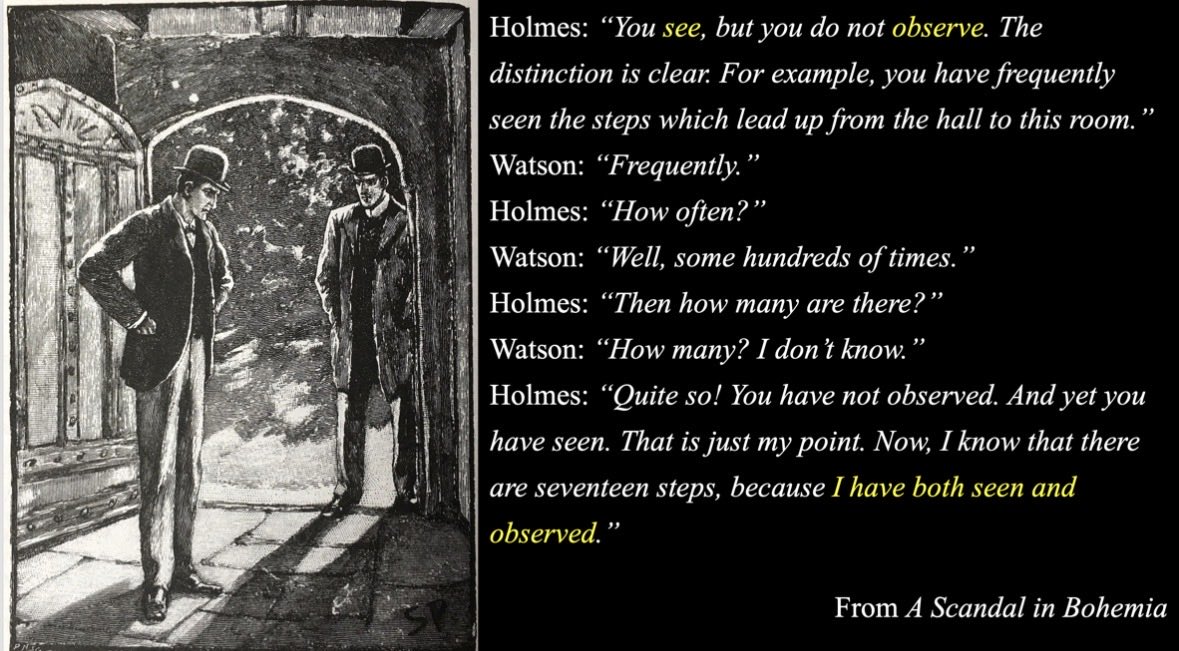
More evidence that kids are better at observation. I'm walking out of my hospital today when my 8-year-old son asks, "Dad, why are the stairs so short?" I've walked and "seen" the exact set of stairs thousands of times, but never made this observation. I was reminded of an http
6.7K views · 28 likes · 0 reposts · 4 replies Open on X →
Can someone help me understand this forest plot? It's taken from a 2007 meta-analysis of antithrombotic therapy in atrial fibrillation. How could the point estimate for the 7 aspirin-only trials favor placebo or control when all but 1 study favors aspirin? I'll note that SPAF
5.7K views · 10 likes · 3 reposts · 4 replies Open on X →
1/14 Why can't you use direct oral anticoagulants (DOACs) in patients with mechanical valves (MVs)? DOACs have been one of the most important advances in my career. And yet, the presence of a MV is one of the few contraindications. The reason highlights the unique nature of 135.4K views · 1.1K likes · 359 reposts · 20 replies Open on X →
@tony_breu Fascinating! Lying in bed reading this by coincidence after mitral and tricuspid valve repair. Didn’t need a valve in the end but this thread answered some of the questions I didn’t want to waste my surgeons time with. 1.4K views · 4 likes · 1 reposts · 0 replies Open on X →
18/18 ➤ Before placement, bioprosthetic valve fixation with glutaraldehyde reduces antigenicity of the graft ➤ α-gal is not affected by glutaraldehyde; it therefore contributes to valve degeneration ➤ Valve tissue may have less α-gal leading to lessened risk of acute rejection 6.8K views · 51 likes · 5 reposts · 4 replies Open on X →
17/ Before closing, one final connection. There are emerging cases reports showing that those with α-gal allergy experience accelerated valve degeneration! It isn't just about intolerance to red meat. https://t.co/GObb2PyyOB https://t.co/zdhWWtBNCw 6.8K views · 25 likes · 2 reposts · 1 replies Open on X →
16/ And given that bioprosthetic xenografts DO elicit an immune reaction that likely contributes to degeneration, some have wondered whether we ought to administer immunosuppression. https://t.co/2nAlbdoYyt 4K views · 12 likes · 2 reposts · 1 replies Open on X →
15/ This doesn't mean α-gal plays no role in rejection. Some have suggested that it is a factor in the degeneration we have seen from the first valve replacements up through the present. https://t.co/G2qQj8dsO9 4K views · 13 likes · 2 reposts · 1 replies Open on X →
14/ This and a follow-up study showed that although porcine valve endothelium expresses α-gal, they do so much less intensely than aortic or vein endothelial cells. Less α-gal may mean a lesser immune reaction. https://t.co/ZvmWkB78Bn https://t.co/86vJAYGFYS 4.2K views · 14 likes · 2 reposts · 1 replies Open on X →
13/ A clue comes from a 2000 study by Chen et al. They transplanted whole pig hearts into baboons. Although the hearts were acutely rejected within hours after implantation... ...the aortic and pulmonary valves were entirely spared! https://t.co/KWHiKUXuLT https://t.co/AjpwJM8 4.5K views · 12 likes · 2 reposts · 1 replies Open on X →
12/ We therefore have two discordant findings: ☞ Glutaraldehyde (GA) does not eliminate the main antigen in acute rejection ☞ Patients receiving GA-fixed bioprosthetic xenografts don't experience acute rejection How can we reconcile these two observations? 4.5K views · 23 likes · 4 reposts · 1 replies Open on X →
11/ This was suggested by a 2011 study by Bloch et al. It showed a sizable anti-α-gal antibody response even after glutaraldehyde (GA) treatment. 💡This indicates that GA treatment does not eliminate the immune response to the α-gal! https://t.co/LUYLC0Zvel https://t.co/Ds7szd 4.9K views · 12 likes · 2 reposts · 1 replies Open on X →
10/ But, glutaraldehyde cannot cross-link carbohydrates because of the absence of amino groups. And, galactose-α-1,3-galactose is a carbohydrate! This means glutaraldehyde does NOT mask α-gal and mitigate the immune response against this antigen. 5K views · 19 likes · 2 reposts · 1 replies Open on X →
9/ After glutaraldehyde was added to the conditioning regimen, the rates of valve success at 1 year increased to 82%. 💡Glutaraldehyde is one reason we don't use immunosuppression after xenograft insertion: many antigens are masked by its cross-linking. https://t.co/Zql9vOKnDY 5.2K views · 39 likes · 4 reposts · 1 replies Open on X →
8/ A solution was offered by glutaraldehyde (GA). GA generates cross-links with amino groups of lysine or other amino acids resulting in "fixation" of the tissue. This reduces the antigenicity of the valves. https://t.co/ionGwpoO5p https://t.co/MQhcaPI0gH 5.4K views · 22 likes · 4 reposts · 1 replies Open on X →
7/ Although early surgeries did not show hyperacute rejection they were accompanied by high rates of valve failure. At one year, just 45-50% were well functioning. Explanded valves showed features indicating an immune response to the xenograft tissue. https://t.co/ionGwpoO5p h 5.4K views · 12 likes · 2 reposts · 1 replies Open on X →
6/ Despite the failures of prior xenotransplantation, on September 23, 1965, a team of French surgeons replaced the calcific aortic valve of a 48-year-old woman with a pig valve. Immunosuppression was NOT used. https://t.co/FLJ4TqIOmC https://t.co/Qp67YGNAZt 5.8K views · 15 likes · 2 reposts · 1 replies Open on X →
5/ Two keys: 🔑 Most non-primates contain α-gal on organ epithelium 🔑 Humans lack α-gal Result: α-gal is perceived as a foreign antigen by our immune system. Would a reaction to α-gal lead to acute rejection of pig xenografts? This was a big question. https://t.co/wq5Wjcvybm h 6.1K views · 15 likes · 3 reposts · 1 replies Open on X →
4/ But, the history of xenotransplantation is riddled with failure, particularly when immunosuppression is not used. 💡The primary basis of hyperacute rejection to xenografts is the immune response to galactose-α-1,3-galactose (α-gal). https://t.co/uoDhkXKQLn https://t.co/b4tcfi 6.7K views · 16 likes · 2 reposts · 1 replies Open on X →
2/ First, some history. The first valve replacements were performed in the 1950s and were made of plastic or metal. The desire to forego anticoagulation saw the emergence of homografts (i.e., valves taken from human cadavers) in the 1960s. https://t.co/JnEyJA0AyR https://t.co/ 7.1K views · 15 likes · 3 reposts · 1 replies Open on X →
3/ But, as with any human organ or tissue transplant, demand outstrips supply. This led to the emergence of heterografts (i.e., xenografts) in which a non-human valve is used. Because pig hearts are similar in size and shape to humans, they were a natural "fit." 6.9K views · 13 likes · 2 reposts · 1 replies Open on X →
1/18 🤔Why don't we use immunosuppression after bioprosthetic valve replacement? Not only is the graft not self, but most aren't even from the same species and instead are from cows or pigs. But unlike other transplants, we forego immunosuppression. Why? Let's have a look. http 149.1K views · 436 likes · 130 reposts · 12 replies Open on X →
Here is an updated list of my tweetorials. https://t.co/EjeIgAvetn 113.4K views · 349 likes · 104 reposts · 9 replies Open on X →

Against accounts of the same size

3 posts from the last 90 days, next to the 100K–1M follower range. shown widely, but few of those viewers react.

Median views6 716this account4 520median for 100K–1M
Reach, %6.23%this account1.64%median for 100K–1M
Engagement, %0.48%this account1.27%median for 100K–1M
MetricThis accountMedian for 100K–1MRatio
Median views per post6 7164 5201.49×
Reach (views ÷ followers)6.23%1.64%3.80×
Engagement rate0.48%1.27%0.38×

Others in this range →   Compare with another account →   How these benchmarks are built →

Growth & engagement

How the posts we collected actually performed: views and reaction rate post by post, what the audience did with them, and where the follower count goes.

Views per post

5K28 Aug
4.9K
4.5K
4.5K
4.2K
4K
4K
6.8K
6.8K
1.4K
135.4K13 May
5.7K18 Jun
6.7K20 Jun
23.1K26 Aug

Last 14 collected posts, oldest on the left. The scale is logarithmic: one post can outrun the rest a hundred times over.

Engagement rate per post

0.44%28 Aug
0.31%
0.62%
0.33%
0.40%
0.40%
0.37%
0.41%
0.88%
0.35%
1.11%13 May
0.30%18 Jun
0.48%20 Jun
1.51%26 Aug

Reactions — likes, reposts, replies and quotes — divided by views. Median for 100K–1M accounts is 1.27%.

What the audience does

Likes48.5%2 510 in total
Reposts14.2%733 in total
Replies1.4%73 in total
Quotes0.9%49 in total
Bookmarks34.9%1 806 in total

Share of every reaction we collected for this account. Replies mean argument, reposts mean endorsement, bookmarks mean the post was worth keeping.

The follower curve appears once this account has two daily snapshots — we take one a day, and this one is on its first.

Similar accounts